The Media Line
Cutting support for Haredi families would weaken Israel’s demographic resilience, economy - opinion
Population decline can create a feedback loop. As populations shrink, the burden on younger generations grows, making it harder for young couples to raise families.


US authorities on the hunt for four Pakistanis in $770 million Medicare fraud case

PKK warns disarmament process at risk unless Turkey links surrender to political reforms

Voices from the Arab Press: China’s Iran dilemma, Israel elections, Hezbollah US talks
A path to peace in Gaza: why real disarmament must come before withdrawal - opinion
At its core is a straightforward proposition: the phased disarmament of Hamas and other Palestinian terror organizations in exchange for the eventual withdrawal of Israeli forces from the strip.
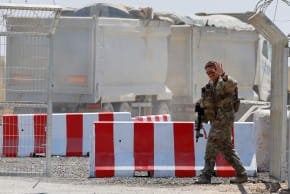
Austin Tice’s fate remains a mystery fourteen years following his disappearance in Syria
The longest-held US journalist in history disappeared near Damascus in 2012, and his family still believes he may be alive and may have been transferred to Iran after the fall of the Assad regime.

Drone strikes, intelligence chief’s killing expose Libya’s fragile balance - analysis
The unclaimed attacks have not been linked, but they come as rival power centers compete for influence and the US seeks to reunify Libya’s divided institutions.

Voices from the Arab press: Mecca pact will strengthen security, stability
A weekly selection of opinions and analyses from the Arab media around the world.

Yemen UN envoy warns Security Council of regional escalation amid Iran-backed Houthi attacks
Grundberg said Houthi attacks in Marib, Hadramaut, Mokha and other areas have resulted in military and civilian casualties.

Saudi Arabia considers backing Yemeni ground offensive to retake Houthi-held Red Sea coast
For three years, Saudi Arabia has sought to contain the Houthis while avoiding a return to full-scale war. What happens next turns on what Riyadh decides.

Why did the US intervene to support Japan's struggling yen? - analysis
The intervention helped the currency gain around 5%, lifting it from nearly 164 yen per dollar to about 155.

Middle East natural resources reveal a hidden map of abundance and scarcity
The smaller resource base has pushed both countries to lean harder into non-oil sectors such as finance, logistics, and tourism.

Saudi Arabia-Turkey-Pakistan defense agreement exposes limits of US military reliance- interview
Cyril Widdershoven, senior advisor at Blue Water Strategy, said that “Gulf leadership increasingly doubts that US power is able actually to prevent missile attacks and drone warfare."
Islamic Republic has no option but to wage war to survive, Iranian student says - interview
Minoo, a left-wing student at a university in Tehran, told The Media Line that the January uprising "demonstrated how millions of people...could overthrow the regime."
