Insects
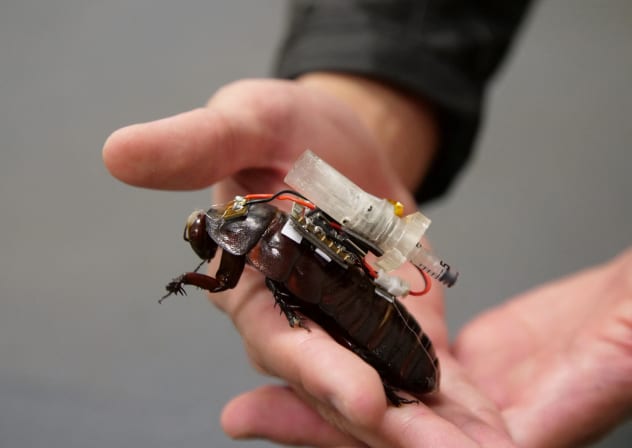
Needle-toting cockroaches could be deployed by search-and-rescue teams for lifesaving injections
Scientists from the universities of Queensland and New South Wales have developed paramedic cyborg cockroaches, dubbed "paraborgs," equipped with miniature injection devices and cameras.

Moroccan locust swarms sweep eastern Iran, threatening crops and farms

INPA releases Red Book for Butterflies detailing extinction, endangerment threats

Study finds insect-borne bacteria turning harmless reed leafhopper into major agricultural pest
Antarctica’s only native insect’s unique survival mechanism
Before the second winter, the larvae reach their final stage but don't pupate. Instead, they enter obligatory diapause, a natural dormancy phase in their life cycle.

Russia bracing for possible mass locust invasion in the summer
To combat the potential locust invasion, 85.8 million rubles will be allocated for creating special squads and purchasing ground sprayers.

The 'unsung heroes': Life-sustaining roles of pollinators and parasitoids
“By studying them, we’re not just learning about their world; we’re finding ways to make our own world more sustainable," Prof. Segoli said.

The real-life horror of cordyceps: nature's zombie-making fungi
Entomophthora muscae infects flies and manipulates their behavior to spread spores.

Brazilian girl killed by South America's most dangerous scorpion
The Brazilian yellow scorpion, or by its scientific name Tityus serrulatus, is considered the most venomous scorpion in South America.

A 99-million-year-old bug that lived in Myanmar discovered by Israeli researchers
Compared to the species already known to science, the new features of the bug include unique colors and shapes that the researchers believe were used as a deterrent against predators.

Get to know the Winter Butterfly
This beautiful creature has colorful rear wings, and surprisingly, its front wings are almost transparent. No other butterfly in Israel has transparent-like wings except the Apollo.

Repeated sexual failures cause social stress in fruit flies, study shows
Rejected males experience frustration that impairs their ability to cope with other stresses, new Bar-Ilan University study finds

Can you spot the praying mantis hiding in this picture?
A viral puzzle has been making the rounds on social media recently. Can you solve it?

Pseudoscorpions of Israel: Two new family records discovered by Hebrew University entomologists
Pseudoscorpions aren't harmful to humans, and are even beneficial because they feed on caterpillars, flies, ants, beetle larvae, and carpet- and book-lice larvae.
