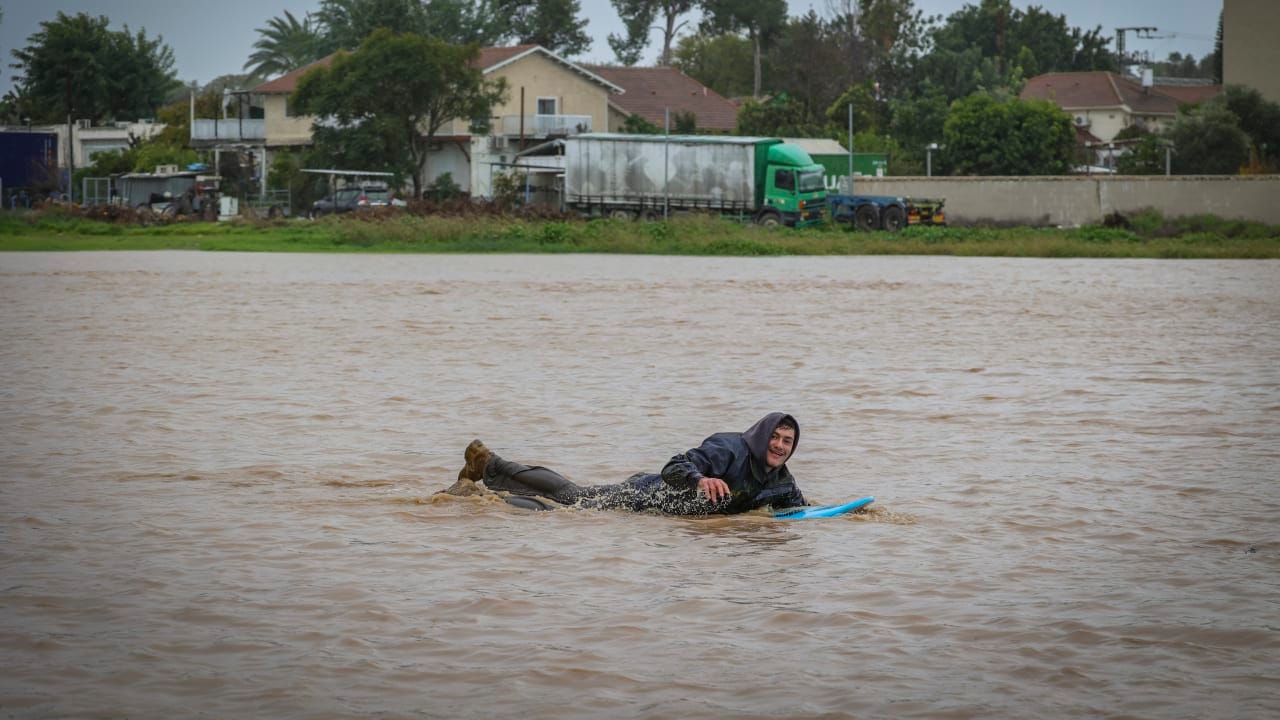
The weekend’s flooding and Wednesday’s earthquake near Eilat should give the incoming government something concrete to discuss while it divides up ministries: whether the infrastructure Israelis depend on can withstand the emergencies the state already knows how to prepare for.
In Kadima, the Israel Meteorological Service measured 117 mm. of rain in about 80 to 85 minutes. Days later, earthquake alerts sounded around Eilat, and flights at Ramon Airport were temporarily suspended for safety checks.
These were different events, requiring different responses. Neither, on its own, establishes that officials failed. The rainfall was exceptional, and checking an airport after an earthquake is precisely what authorities should do. But both bring us back to work that remains unfinished long after the immediate disruption ends.
There is enough in the State Comptroller’s Reports to understand what that work involves.
What the State Comptroller found
In June, a follow-up audit examined flood preparedness in Ashkelon, Nahariya, and Jisr e-Zarka. It revisited deficiencies identified in 2021. By the end of the follow-up, drainage infrastructure remained unsuited to updated rainfall and flow scenarios, and the authorities lacked multiyear investment plans.
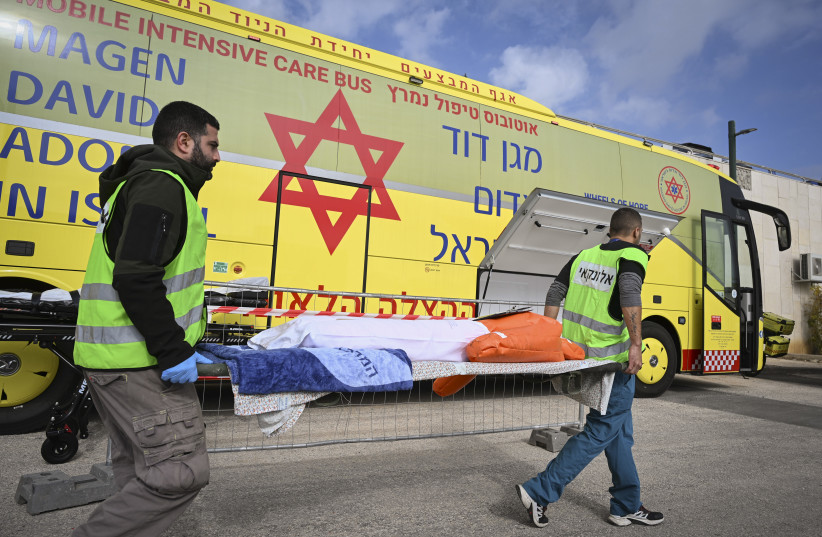
The significance is in that chronology. Authorities had already been told what needed attention. Years later, the comptroller was still asking whether it had been addressed.
There had been progress on drainage master plans and forecasting. Yet responsibility for urban drainage infrastructure remained insufficiently defined between municipalities and drainage authorities. That leaves a basic question unresolved before anyone even gets to the engineering: Whose job is it to make sure the work happens?
The report also explains why standing still is dangerous. As more land is built over, less rain can soak into the ground. Drainage has to accommodate the water that runs off those surfaces, alongside more intense rainfall. A system that was inadequate at the previous inspection does not become more suitable as the town around it grows.
Over 1,100 buildings near fault line not reinforced
Earthquake preparedness exposes another difficulty: The places where reinforcement is most necessary are not necessarily the places where it is profitable.
The State Comptroller’s Report in March 2023 examined Beit She’an, Tiberias, Safed, Kiryat Shmona, and Hatzor Haglilit, which are all near the fault line. At the audit’s close, 1,124 of the 1,208 buildings identified for reinforcement had not been strengthened. Neither had 38 of the 54 schools identified as needing the work.
On Wednesday, the State Comptroller’s Office brought them back into the discussion and said a follow-up audit was under way. The government should be able to explain what has changed in the meantime.
The earlier audit also found that TAMA 38, the national program intended to encourage reinforcement through private development, had not been implemented in those five municipalities. Its economic model favored places with higher property values.
That is a problem public funding must address. A building’s need for reinforcement cannot depend on whether a developer can make enough money from the project. Nor can a municipality with limited income simply be told to find the money because the buildings happen to stand within its boundaries.
An alert can give people time to act; it cannot strengthen a building. Instructions to leave a classroom are necessary. So is ensuring that a school already identified as vulnerable gets the work it needs.
What Israel's incoming government should do first
For the incoming cabinet, the starting point should be the projects already identified, with funding and responsibility settled together, with regular public reporting. Where work has stalled, ministers should explain whether the obstacle is money, planning approval, or disagreement between the authorities, and resolve it.
Residents should be able to find out whether their school is awaiting reinforcement, when work is scheduled, and who is responsible for delays. That information should be available before an alert sends parents looking for answers.
Israel’s security demands are immense. They do not relieve the government of responsibility for dangers that arrive without an enemy making a decision. Flood protection and building reinforcement require sustained attention, including when there is no emergency on television.
The next government will have plenty of arguments about what kind of country Israel should be. Making it a country where known risks are addressed before people lose their homes or their lives would be a useful place to start.