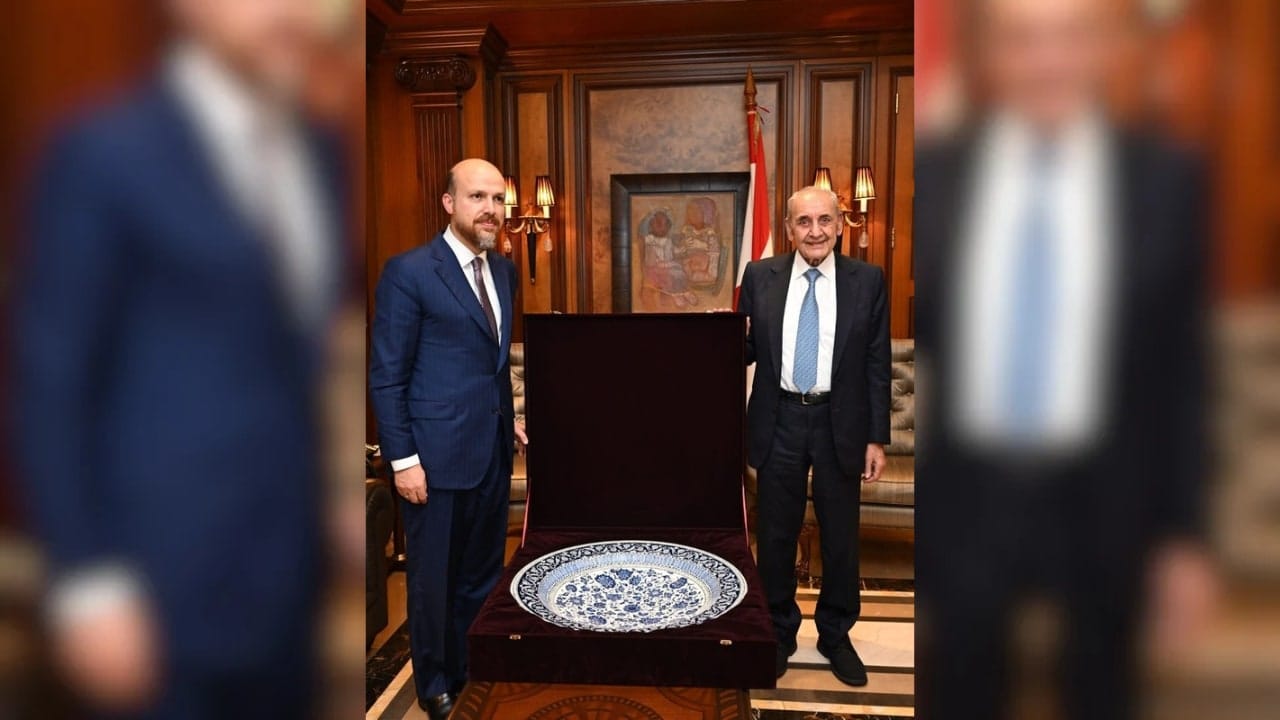
Bilal Erdogan, the son of Turkish President Recep Tayyip Erdogan, received an enthusiastic welcome in northern Lebanon during a three-day visit that included meetings with senior Lebanese political leaders.
His visit illustrates Turkey’s efforts to expand its influence in Lebanon at a time when the regional balance of power is changing, particularly following the fall of the Assad regime in neighboring Syria.
The visit took Erdogan from Beirut to Tripoli and Akkar, areas with historical, cultural, and religious ties to Turkey. However, his meetings with Lebanese Parliament Speaker Nabih Berri, Druze leader Walid Jumblatt, and Future Movement Vice President Bahia Hariri are evidence that Ankara’s outreach extends beyond its traditional relationships with Sunni communities in northern Lebanon.
Turkey already has an influence in Syria and has had forces in northern Iraq for years. It has increasingly eyed Lebanon for new foreign policy initiatives. Further, Turkey has a role in Libya, Somalia, and the Eastern Mediterranean.
With Turkey-Israel tensions increasing, could Ankara’s role shift the balance of power in Lebanon and the region?
Erdogan’s visit attracted attention in the Lebanese media. Al Akhbar, a newspaper often described as pro-Hezbollah, portrayed the reception in Tripoli as “exceptional.”
“The exceptionally warm welcome Tripoli accorded Bilal ... was not merely an expression of historical and social ties between the city and Turkey, but also carried political and economic significance,” the newspaper reported on Saturday.
Al Akhbar noted that the reception was particularly striking when compared with the more subdued welcome given to Lebanese President Joseph Aoun during a visit to Tripoli approximately two weeks earlier.
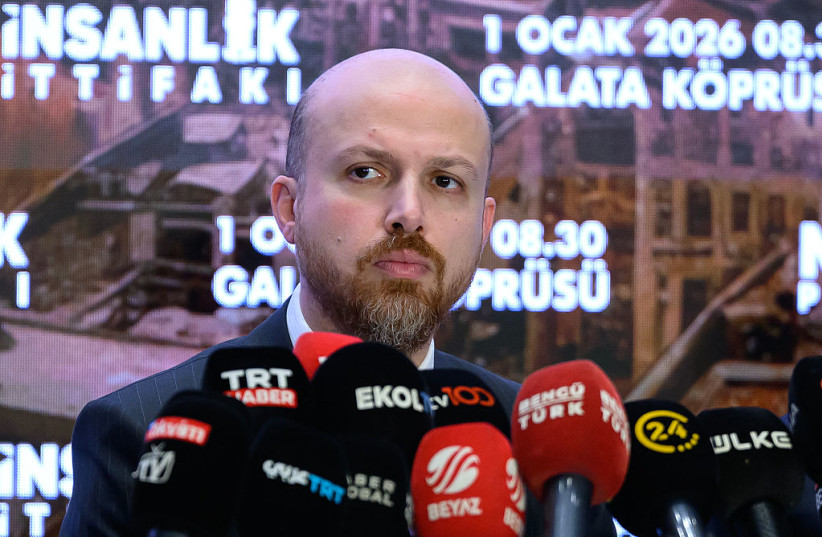
This comparison matters because it highlights the visibility of Turkey’s influence in northern Lebanon. The enthusiasm for Erdogan’s visit reflects connections developed over decades, including cultural and educational initiatives, religious ties, and a shared Ottoman heritage.
Balil Erdogan visits symbolic Ottoman sites in Tripoli visit
Tripoli, Lebanon’s second-largest city, retains important architectural and cultural reminders of Ottoman rule. It has a large Sunni population.
As Hezbollah dominates southern Lebanon, Sunnis have often felt they don’t have a strong patron. This is especially true given that Saudi Arabia has reduced its role in Lebanon’s politics.
Syria left Lebanon in 2005 after Hezbollah murdered once-Lebanese prime minister Rafik Hariri. Later, Hezbollah intervened in the Syrian civil war in 2012. Bilal Erdogan’s itinerary included the Hamidiyeh Clock Tower in Al-Tall Square, the city’s old markets and the Mansouri Great Mosque.
The clock tower, built during the reign of Ottoman Sultan Abdul Hamid II, was decorated with Lebanese and Turkish flags for the occasion. Erdogan also visited Salam al-Sibai, whom Al Akhbar described as a granddaughter of the Ottoman sultan.
These stops appear to be symbolic. Turkey has emphasized its Ottoman-era connections across the Middle East as part of its cultural diplomacy. In Lebanon, this history provides Ankara with a foundation for relationships that extend beyond formal government institutions.
At the Mansouri Great Mosque, Erdogan was welcomed by the mufti of Tripoli and the North, Sheik Muhammad Imam. The reception also included Maronite Archbishop Youssef Antoine Soueif, Lebanese Deputy Prime Minister Tarek Mitri, parliamentarians, and local political and economic figures, reports said.
The participation of Christian and Muslim religious leaders gave the event a broader public character. When Erdogan subsequently traveled to Akkar, he visited Dar al-Fatwa in Halba and met Mufti Sheik Zaid Mohammad Bakkar Zakaria, local parliamentarians, and religious representatives.
According to Turkey’s Haberler, Erdogan addressed young people in Arabic and conveyed his father’s greetings. The Turkish report emphasized his use of Arabic and his message of friendship to Lebanese communities.
He also visited al-Kawashra, which has Turkmen roots and longstanding ties to the country. Turkey’s President Erdogan had visited the town in 2010 alongside then-Lebanese prime minister Saad Hariri, the son of Rafik Hariri. These connections help explain why northern Lebanon occupies an important place in Turkey’s regional outreach.
After visiting northern Lebanon, according to Turkey’s pro-government Anadolu Agency, Erdogan and his delegation, as aforementioned, met Future Movement’s Bahia Hariri, the prominent Druze leader Jumblatt, and Berri, the parliament speaker, in Beirut.
The delegation included Turkish Ambassador to Beirut Murat Lutem and Yunus Emre Institute president Prof. Selim Argun. This institute promotes Turkish language and culture abroad, which is why this meeting is indicative of the cultural dimension of Ankara’s engagement.
Moreover, these meetings are important because the Lebanese figures represent different political and communal constituencies.
Not only is Bahia Hariri associated with the Sunni Future Movement, but she is also connected to the political legacy of her brother, Rafik Hariri. Jumblatt is a central figure in Lebanon’s Druze political establishment, while Berri leads the Shi’ite Amal Movement and has been supportive of Hezbollah.
Anadolu Agency reported that Jumblatt highlighted Turkey’s role in encouraging regional dialogue and stability and expressed support for expanding political, cultural, and economic cooperation. Berri’s office said the discussions addressed bilateral relations and regional developments.
Turkey seeking Lebanese relationships beyond traditional Sunni partners
Based on this visit, it is clear that Ankara is seeking relationships across Lebanon’s political landscape rather than relying exclusively on its traditional Sunni partners.
This is important in a country where regional powers have historically cultivated relationships with different political and religious communities.
For instance, Iran backs Hezbollah as a proxy group, while Saudi Arabia and other Gulf states have played important roles in Lebanese politics.
Turkey's approach combines political diplomacy with cultural influence, investment in educational institutions, and historical connections. The visit also underlined Syria’s importance to Turkey’s vision for Lebanon.
According to Al Akhbar, Bilal Erdogan said that developments in Syria had created an opportunity for him to visit Tripoli after circumstances in previous years had prevented such a trip.
He also discussed the concept of a “geography of the heart,” linking Turkey’s security to stability in neighboring countries. Erdogan said Ankara “will never allow Lebanon to be left without support or a solution,” per Al Akhbar.
This language reflects Turkey’s self-perception as a regional power with interests extending beyond its borders.
The fall of Syrian president Bashar al-Assad’s regime in December 2024 changed the strategic environment between Turkey and Lebanon. Ankara has developed close ties with Syria’s new leadership and has sought to play a key role in the country’s political and economic reconstruction.
For Lebanon, Syria is not just a neighboring country. It is the principal overland route connecting Lebanon to Turkish and European markets.
Al Akhbar reported that Erdogan’s visit included proposals to expand trade and investment and revive land and rail connections between Lebanon and Turkey through Syria. Such initiatives could be particularly significant for Tripoli, which has a port, commercial infrastructure, and proximity to the Syrian border.
The proposals also illustrate how Turkey may seek to translate its political relationships into economic influence. Rebuilding transport links would require substantial investment, improved infrastructure, and stable security conditions in Syria.
Lebanon attempting to navigate shift in regional power balance
The visit did not establish that these projects have been approved or funded. This suggests a partnership between Riyadh and Ankara, along with work with Syria.
Bilal Erdogan’s trip comes as Lebanon navigates political and economic challenges alongside shifts in the regional balance of power. Turkey, as noted above, has historical connections, cultural inroads, and relationships with Sunnis in Lebanon.
What matters about the latest visit is the combination of enthusiastic public receptions, meetings with political figures, and a clear regional vision connecting Lebanon, Syria, and Turkey.
The fact that a visit by the Turkish president’s son attracted such attention also demonstrates the importance of personal and symbolic diplomacy in the region.
Bilal Erdogan does not hold the office of Turkish foreign minister, and his visit should not be confused with a formal negotiation between governments. Nevertheless, his position within Turkey’s political and cultural establishment gives his activities significance beyond those of an ordinary visiting foundation official.
The trip means Ankara sees an opportunity to strengthen its position in Lebanon through several channels at once. In northern Lebanon, it can draw on Ottoman heritage, Turkmen communities, and cultural relationships. In Beirut, it can engage political leaders across sectarian divisions. Through Syria, it can explore trade routes and infrastructure projects that would connect the eastern Mediterranean more closely to Turkey.
The broader question is how these initiatives will translate into lasting political and economic influence. For now, the reception given to Bilal Erdogan illustrates the extent to which Turkey has become a visible participant in Lebanon’s changing regional relationships.