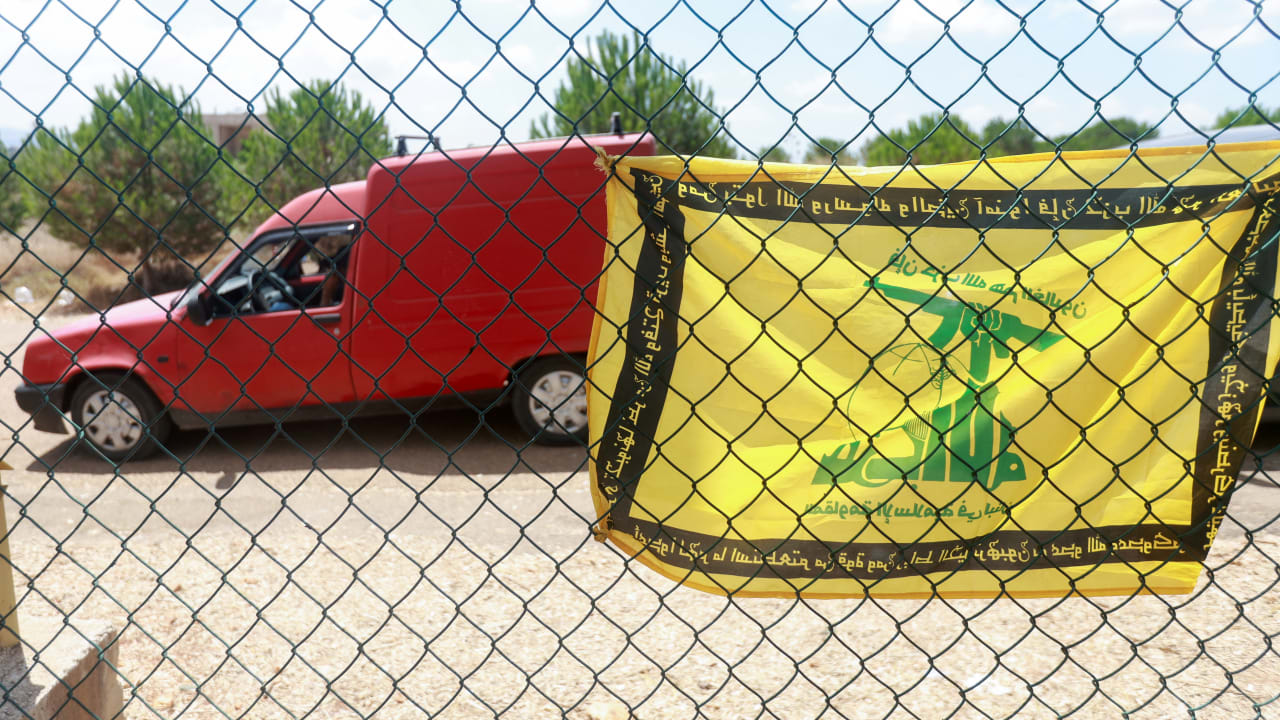
Lebanon’s Military Court has charged 13 members of Hezbollah in connection with the half-ton shipment of explosives seized from a vehicle traveling toward Beirut earlier this month, Lebanese officials announced over the weekend.
Judge Claude Ghanem issued charges against the 13 members of the terror group, including the two Hezbollah operatives arrested in the vehicle transporting the explosives, identified by Lebanese media as Ali Al Kurdi and Haitham Amhaz. However, only the two men named remain in Lebanese custody.
The defendants were charged with endangering state security, defying government decisions, membership in a banned organization, and possessing firearms and explosives.
While the National News Agency reported that the defendants could face up to 10 years in prison, Lebanese military courts have previously handed down lenient sentences to Hezbollah operatives accused of violating the country’s arms laws. In March, four Hezbollah members were released by the Military Court, presided over by Wassim Fayad, on symbolic bail of $21 after spending just six days in detention for possessing illegal weapons.
Explosives discovered at a checkpoint in Dahr al-Baidar in the Bekaa Valley earlier this month
The explosives were discovered at a checkpoint in Dahr al-Baidar in the Bekaa Valley earlier this month, prompting concerns that they could have been intended for a political assassination. Although Hezbollah claimed the explosives were destined for Israel, several Lebanese commentators noted that the materials seized were of the same types used in the truck bombing that killed former Lebanese prime minister Rafic Hariri. The Special Tribunal for Lebanon found that Hezbollah members were responsible for the attack, which killed 22 people and wounded hundreds.
Hezbollah has demanded the release of its operatives and the return of the 250 kilograms of TNT-type explosives and 250 kilograms of C4 seized in the operation. Both demands have so far been rejected.

The incident comes as Jerusalem awaits evidence that Beirut can contain the threat posed by Hezbollah as part of efforts to secure a lasting ceasefire.
According to the National News Agency, Hezbollah parliamentary bloc MP Hussein Hajj Hassan criticized the charges as “unfair and unjust,” alleging that the indictment violated the principles of the National Pact, the Universal Declaration of Human Rights, the United Nations Charter, and numerous Lebanese laws.
“The detainees and the other defendants were performing a national duty in defense of their country and the sovereignty of the state, and to protect the Lebanese people,” he claimed, despite recent polling indicating that most Lebanese want Hezbollah disarmed and the elected government to have sole authority over military decisions.
“They have no connection to the baseless accusations leveled against them by parties within and outside the government.
“These resistance fighters were not in a position to harm the security or safety of the state, but were confronting the Israeli enemy, which threatens Lebanon’s existence through its continued occupation and the assassinations, bombings, and destruction.”
Lebanese FM pushes back against Iran’s influence in the country
The charges come as Lebanon’s Foreign Minister Joe Rajji publicly pushes back against Iran’s influence in the country. Speaking on Saturday, Rajji said Lebanon would no longer allow its territory to be used to threaten the security of Arab countries, stressing that foreign policy decisions must be made in Beirut, according to the National News Agency.
“Lebanon will no longer accept its territory being used as a platform to threaten the security of its Arab brothers or as an advanced defense line serving the interests of other countries,” Rajji said during the Manama Dialogue in Bahrain.
“Foreign policy is decided in Beirut, and national security is exclusively the responsibility of the state.”
“Lebanon has long suffered the devastating consequences of the instrumentalization of these armed organizations for the benefit of foreign interests, as well as the hijacking of its national decision-making power to serve regional agendas foreign to the interests of the Lebanese people,” he said.