
‘Always a story about light under pressure”: That’s how Elina Furman, 53, the US-based publisher and editor-in-chief of ORA (Light), referred to the history of the Jewish people dating back to biblical times, in her June editor’s letter.
Like so many of us, Furman’s life dramatically changed after Oct. 7, and ORA was born out of her deeply awakened connection to the Jewish people and Israel.
She told the Magazine, “It was almost as if my ancestors rose up from the ground and said, ‘It’s time, people, to come together.’”
This new luxury Jewish lifestyle and culture magazine debuted in January 2026 with actor Jonah Platt and model-media personality Elizabeth Pipko on the cover, above the caption “A New Light.” A conversation between them focuses on the importance of uniting as a people, regardless of political differences.
Additional features and Q and As with writers, entertainers, fashion designers, artists, and activists reveal how everyone has transformed into warriors fighting the same new but ancient battle against antisemitism that Jews throughout history have fought.
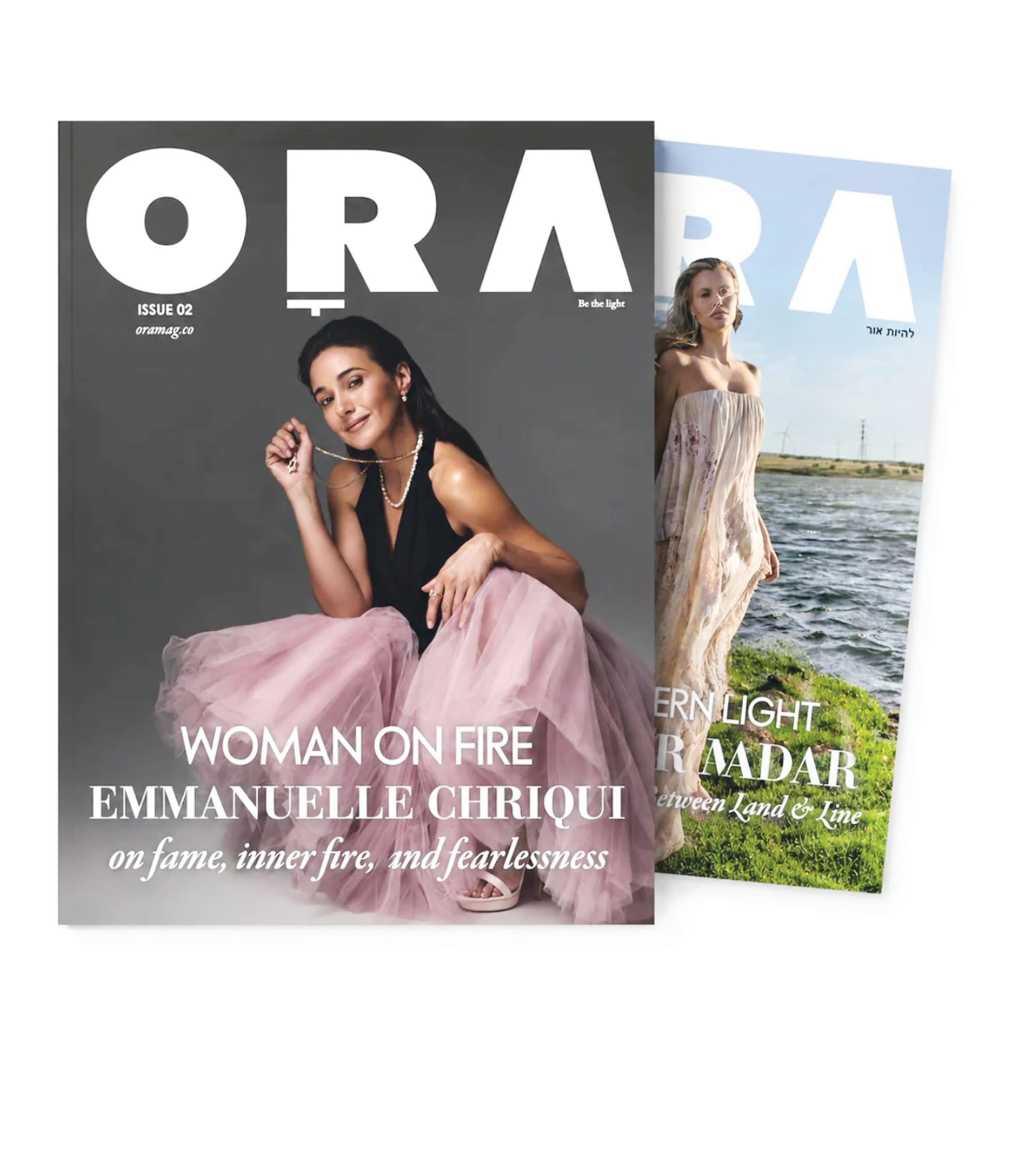
Actress Emmanuelle Chriqui graced the cover of the second issue, which came out in June. She is delicately dressed like a ballerina, holding a Star of David pendant from her necklace confidently in her hand. She told ORA she felt like she was living in a world “flipped upside down,” and that she wishes we could “somehow release the ancestral trauma and stand together proudly.”
During a trip to Israel, Furman decided ORA should have two covers, one photographed in Israel and one in the US, to reflect the symbiotic relationship these two countries share. Israeli fashion model Nibar Madar is on the back cover, the Sea of Galilee behind her.
Madar described the beauty and peace she still feels being at home in the North, even during the war. “I know that sounds strange when you hear bombs and rockets, but safety is also a state of mind,” she told ORA.
When asked what she would like to relay to readers around the world, she expressed her gratitude to the Jewish community and urged everyone to “keep telling the story of Israel beyond the headlines. The beauty, the warmth, the creativity, the culture, the humanity.”
ORA’s advertisements are stylistically striking, with a connection to Judaism through symbols or art or the Jewish creator behind them.
Messages that show support and compassion break through the surface. An ad for Oriya jewelry shows a man with a Star of David bracelet and the caption “The story you wear is the story you keep alive.” The brand was created in response to Oct. 7, with €18 (chai) from the sale of every Oriya piece being donated to Atufim B’Ahava (“Wrapped in love”), an Israeli fund that supports children who lost one or both parents on that tragic day.
FURMAN SAID that, before Oct. 7, she was a liberal feminist. “I was just living in a world where we were all being empathetic, and we cared about the world... and I had no idea about the ideology that was driving it. I wasn’t focused on Israel.” She didn’t have a lot of Jewish friends, and although she had attended Hebrew school, she didn’t connect with it at the time.
Furman was born in Ukraine. She described her family as “like Soviet Jewry, not particularly religious,” due to the Marxist-Leninist atheist leanings of the Communist Party.
“Coming from the Soviet Union, where people are constantly lying to you, and there’s propaganda, you’re just so skeptical of everything that when people try to come at you with religion or anything, you’re just such a cynical human,” she explained.
Even though her family didn’t celebrate Hanukkah back then, Furman was always aware that she was Jewish, and she learned about Israel because her father’s side of the family was very Zionistic. Her father’s brother was one of the first refuseniks who made aliyah. Furman remembers her sister talking about their uncle on the bus, and her mother immediately shushed her. “It was a big secret,” she said.
'If you have the chance to leave, you leave'
Furman remembers she and her family having to keep a low profile because of being Jewish and because of her maternal grandfather’s classified work with the government.
“Our apartment was bugged,” she revealed. “My grandfather was a geophysicist, and in World War II during Stalin’s time, he discovered some natural gas that allowed the Russians to win the war against the Germans.” She said that he received a medal of honor for his work in 1947.

Describing Ukraine as discriminatory and offering fewer opportunities to Jews, she said, “When you have ‘Jew’ on your passport, your days are kind of numbered. So if you have the chance to leave, you leave.”
When Furman was seven and her sister was eight, they moved to the Rogers Park suburb of Chicago, before settling in Highland Park.
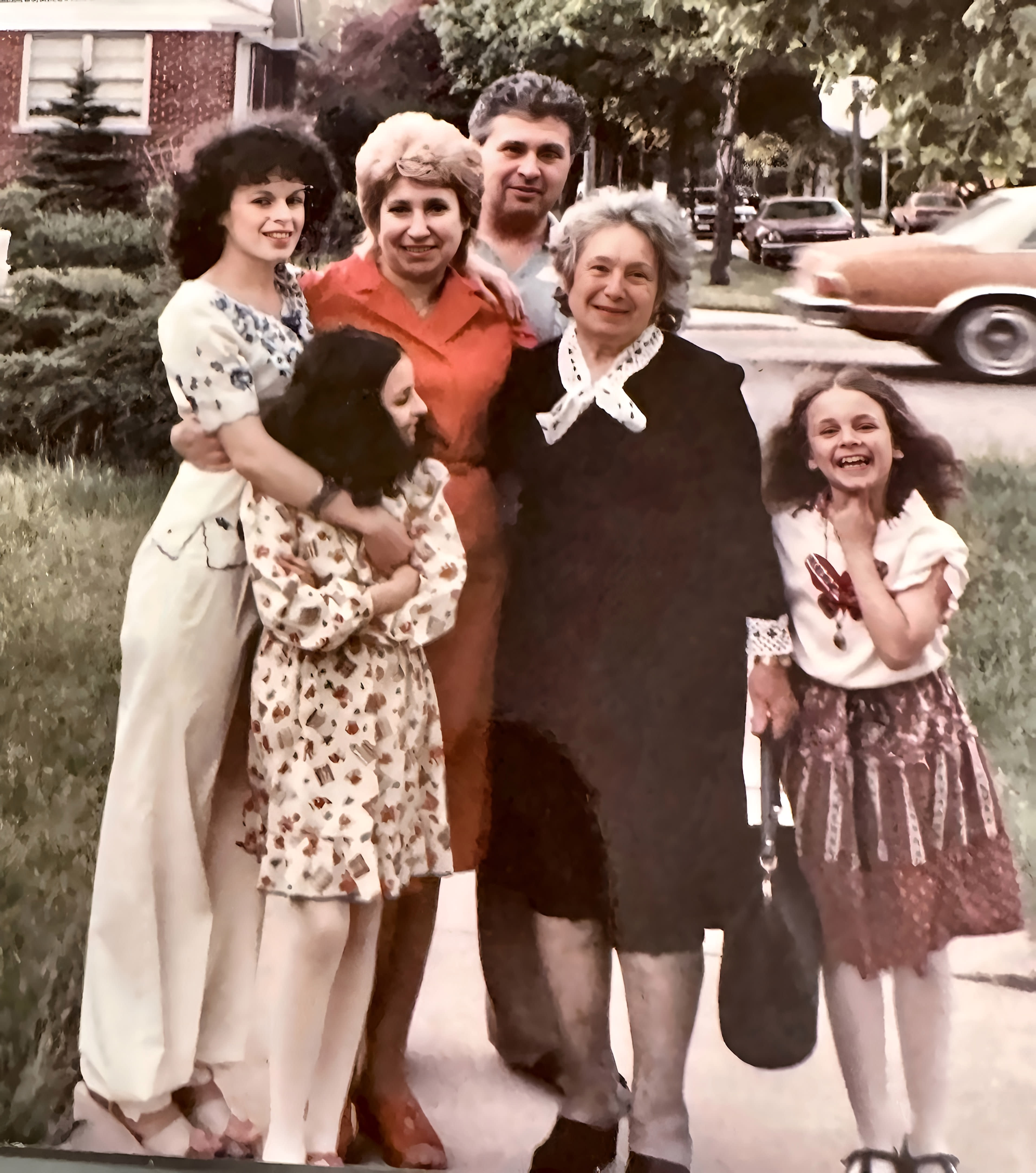
FURMAN’S EVER-EVOLVING professional endeavors have always been reflections of her own inner world and experiences.
Shortly after graduating with a concentration in English from the University of Illinois Urbana-Champaign, Furman and her sister, Leah, spent a decade authoring over 20 books together, including unauthorized celebrity biographies and self-help nonfiction for young adults. Her book about Ricky Martin became a New York Times bestseller.
The Everything After College Book was published when Furman was in her mid-20s, adjusting to being in the real world. Boomerang Nation: How to Survive Living with Your Parents the Second Time Around was published by Touchstone (an imprint of Simon & Schuster) when Furman was living as roommates with her mother and sister at condos in Chicago and New York City.
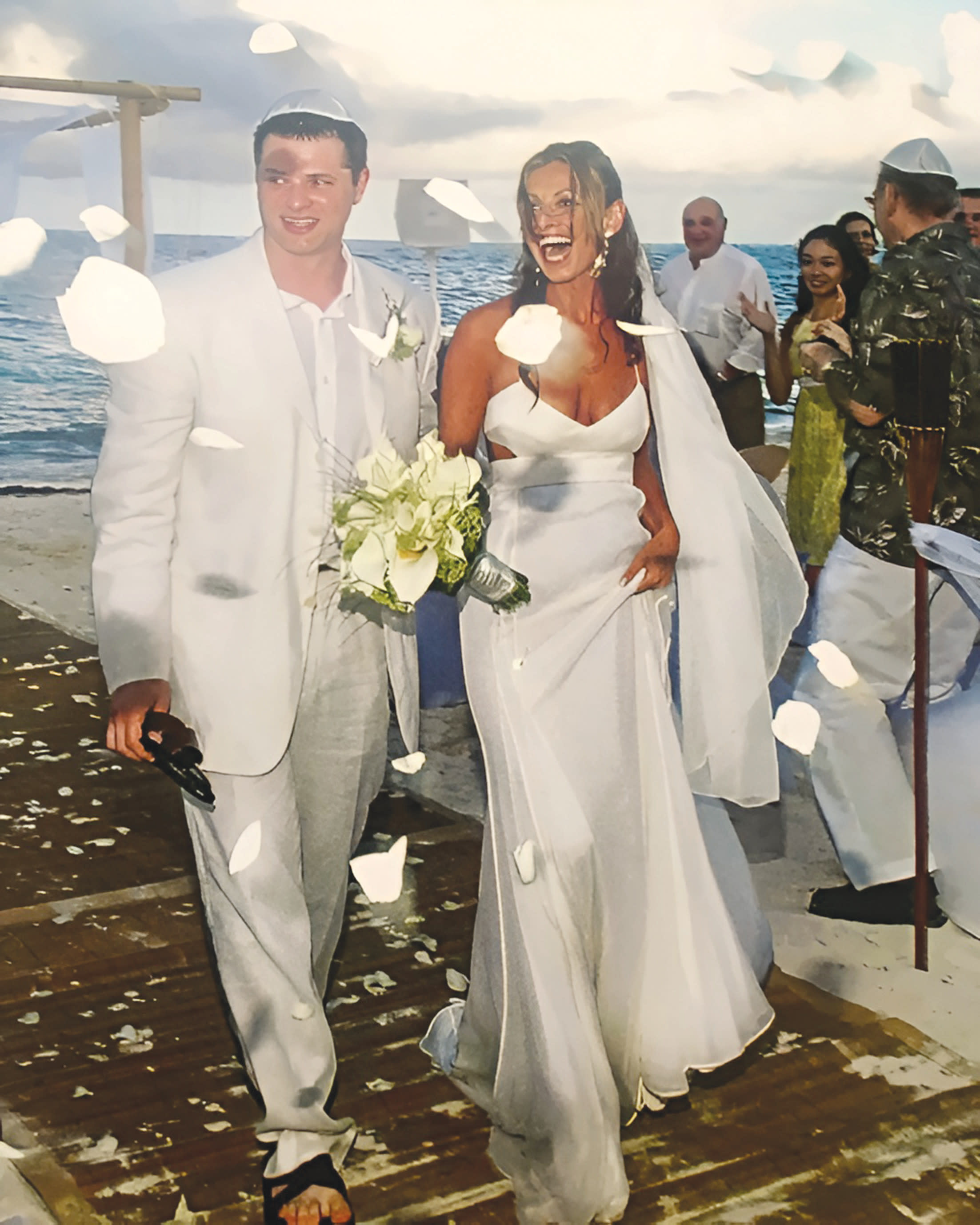
A self-professed former commitment phobe, Furman wrote Kiss and Run, one of the first books about women’s fear of commitment, while she was dating her soon-to-be husband, because she said that she “struggled so much with being scared of marriage and children.” It was published in 2007, the same year she married her husband, with whom she has two teenage sons.
Furman’s books have been featured in The Wall Street Journal, The New York Times, Fortune, The Washington Post, USA Today, Cosmopolitan, Newsweek, Money Magazine, and Entertainment Weekly.
She has made guest appearances on The Today Show, Good Morning America, CBS The Early Show, and New York Weekend Today.
For 30 years, Furman immersed herself in the field of media and marketing, which gave her the experience to launch the magazine she didn’t yet know she would create. After managing the launch of ELLEgirl.com and WomansDay.com, she became the editorial director of Seventeen digital.
She was also editor-in-chief of two luxury lifestyle magazines, MAR in New Jersey and Jamrock Magazine, based in New York, which centered on Jamaican and Caribbean culture.
Furman described working on print magazines as an immensely fulfilling experience that is her “favorite job on the planet” because of the tangible feeling of turning the pages and seeing the photos, as opposed to working on digital, which is temporal and “in the ether.”
In March 2009, a year after Furman’s first son was born, she launched a media company called A-List Mom that amassed over 77,000 subscribers.
AT THE time of Oct. 7, Furman was working toward growing the award-winning baby massager company she founded in 2020 called Kahlmi (pronounced like “calm me”), to help mothers connect with their babies cognitively and emotionally.
She found herself “almost paralyzed with grief and shock and awe, like all of us,” and started spiraling down the rabbit hole on social media about Israel, immersed in learning about the politics of the Middle East conflict and the history of the region.
Furman described the sense she was “walking on a glass floor and everything just cracked open.... It was like finding out the world is round when you thought it was flat.”
In February 2024, Furman felt a calling to bear witness through a trip to Israel sponsored by the United Jewish Federation (UJF). She said, “I was trying to cope with all these feelings, like what is happening, how does this fit into my life, and why am I so devastated all day long, and why can’t I live my life normally anymore?”
Furman described the heart-wrenching experience of seeing Tel Aviv “like a ghost town,” displaced families at her hotel, bullets on the ground of Kfar Aza, and a hostage poster of Emily Damari outside the small cottage where she lived.
“I wanted to make sure that our stories are told. I didn’t even know I was going to do anything then,” she stated.
When Furman started posting about her support for Israel on her baby company’s Instagram page, it was mysteriously shut down.
“I think someone targeted me because I said something about being Jewish, and then I got reported, and my whole account got shut down. I had 500,000 followers. I lost four years of work,” she explained.
While scrolling on Instagram in June of last year, she saw an account with pictures of celebrities on mock magazine covers titled “Zionist.” Before she realized the magazine covers were superimposed images, she wondered, “Why didn’t I create this?” She continued, “I always create what I think I need, and I assume that if I’m suffering or struggling, that means that there are others feeling the same way, and that’s kind of how I’ve always started everything.”
When she came up with the idea for ORA, she envisioned it as “a record of our beauty and light and excellence.”
She added, “I just took being Jewish for granted, and then I started seeing all these people out there working, being amazing, and on top of their fields, and I didn’t even know who they were.”
Without already having a network within the Jewish community, Furman seemingly made connections out of thin air. She insisted, “I knew no one in the Jewish world.” She just started contacting actresses, fashion designers, filmmakers, and artists, and some resonated with ORA and immediately wanted to be a part of it.
Actor Jonah Platt – known for playing Fiyero in Wicked on Broadway and for hosting the Being Jewish podcast – was one of the first people she reached out to. In addition to being on the cover of ORA’s debut issue, he is also ORA’s editor-at-large.
The Brigade, a private, invitation-only Hollywood entertainment industry network consisting of friends and allies of the Jewish community, will be advisers to ORA’s Hollywood issue in Spring 2027.
FURMAN ALLUDED to feeling something different propelling her in this endeavor that she did not expect.
“I’m not at all religious, really, but I am spiritual,” she explained. “It’s almost like if Hashem [God] knows there’s a need for this, and this is important to the world, it will just happen, and it will continue to grow, and all I need to do is meet it halfway.... It’s not about me.”
In January 2026, Furman returned to Israel for another UJF mission trip, this time as part of a leadership group because of the launch of her magazine that month and her local advocacy for Israel. She was relieved to see Israel in a different light – resilient and flourishing. “These people are heroes,” she said.
Furman envisions ORA, which will be released biannually, becoming a community and a cultural conduit between Israel and Diaspora Jews.
She described how she and Maddy Hershlikovitz (Baziz), ORA’s managing editor in Israel, are planning high-end curated experiential trips to the Holy Land to “feel the culture and to meet the people: the creatives, the designers, the architects, the artists, the dreamers.”
For example, people can learn how to cook a meal from a chef at a top restaurant, and discover the natural agricultural resources used to source the ingredients in a makeup line directly from the creator.
Maddy Hershlikovitz: ORA's managing editor in Israel
Hershlikovitz was born in Paris, and moved to Israel with her family when she was one year old. She was raised in a religious home in Jerusalem.
Hershlikovitz met Furman through a mutual friend she knew from summer camp in Nyack, New York. Her background in publishing, culture, travel, lifestyle, and the arts made her a natural fit for ORA.
Hershlikovitz told the Magazine, “I have a lot of knowledge that I’ve collected through the years about not just Israeli fashion and culture, but women, in particular, and their interests, and what drives them. I know a lot of inspirational figures here in Israel who I used to work with, so that really helps a lot.”
She has worked at The Jewish Agency for Israel, Birthright Israel Foundation, was head producer of Nashim magazine for Orthodox Jewish women, and an event producer for arts festivals in Jerusalem.
In 2020, Hershlikovitz founded Messody, a boutique travel venture that arranged tours for women to Morocco, where they could explore culture and fashion and learn about the history of Moroccan Jews. Hershlikovitz’s mother, Dr. Oran Baziz, was the tour guide.
Hershlikovitz described how she was just 10 years old when she survived the 1960 earthquake in Agadir, Morocco, which tragically took the lives of her father and sister and approximately 1,500 other Jewish people from Agadir.
When Hershlikovitz met Furman over a Zoom call in April last year, she said, she “loved the idea of fighting antisemitism with light.”
Furman sent her the first issue of the magazine, and Hershlikovitz recalled, “The minute I saw it, I fell in love. I was amazed – it’s beautiful!”
She added, “You feel like you’re a part of a community of readers – combining topics from Israel and the Jewish community in the US is just so powerful.”
Earlier that day, Hershlikovitz stopped by the Ariel Toledano Bridal Couture Studio in Tel Aviv to see the dresses and ask the designer about his plans for Israel’s Fashion Week on November 9-12.
Hershlikovitz relayed how, when she asked Toledano if he was afraid of the possibility of war with Iran, he told her, “I’m never afraid. I’m optimistic. I have to keep creating and hopefully make people happy next week when I have my show in Tel Aviv.”
“The Israeli designers, the Israeli architects, the real estate in Israel, the restaurants, the chefs, they all tell a modern Jewish story in a Jewish country that is in a very challenging time, but doing its best to continue working and creating – really being a light unto the nations.”■
ORA’s first salon formal dinner event, Women of Light, will be in November at Amali in New York City, and another event will be held in Los Angeles in January.
Magazine Editor Erica Schachne will be featured in ORA’s next 208-page issue, available November 16. Israeli actress and activist Noa Tishby is on the front US cover, and Israeli fashion producer and entrepreneur Motty Reif is on the US back cover.
To view ORA online, click here: https://oramag.co