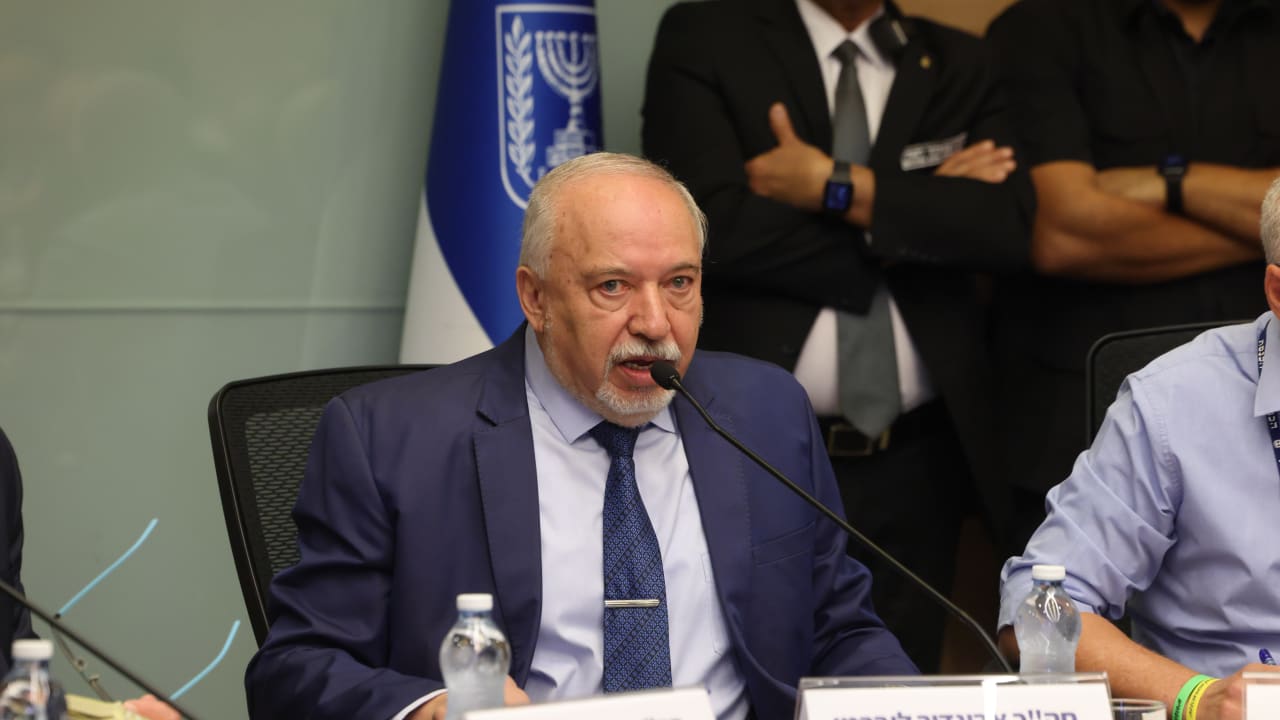
The Knesset's influential Foreign Affairs and Defense Committee (FADC) voted on Monday to appoint Yisrael Beytenu leader MK Avigdor Liberman as its temporary chairman.
Liberman told the panel that the committee would begin discussing a law to enforce conscription into the IDF on Monday afternoon, aiming to develop sustainable legislation that could pass, while acknowledging that it would not require everyone to enlist.
“We will introduce a fair conscription law that will pass through three stages: the [IDF] chief of staff, the High Court of Justice, and [United Torah Judaism spiritual leader] Rabbi Lando. That is the formula,” Liberman told the panel.
However, Liberman acknowledged that the law would not require everyone to enlist, while maintaining that it would still be fair.
Party leaders in the bloc led by Yashar leader Gadi Eisenkot, including Liberman, have recently opened the door to coalition negotiations with the haredi parties after previously drawing a line at partnering with them, offering an alternative path to forming a government amid the political deadlock following the October 27 elections.
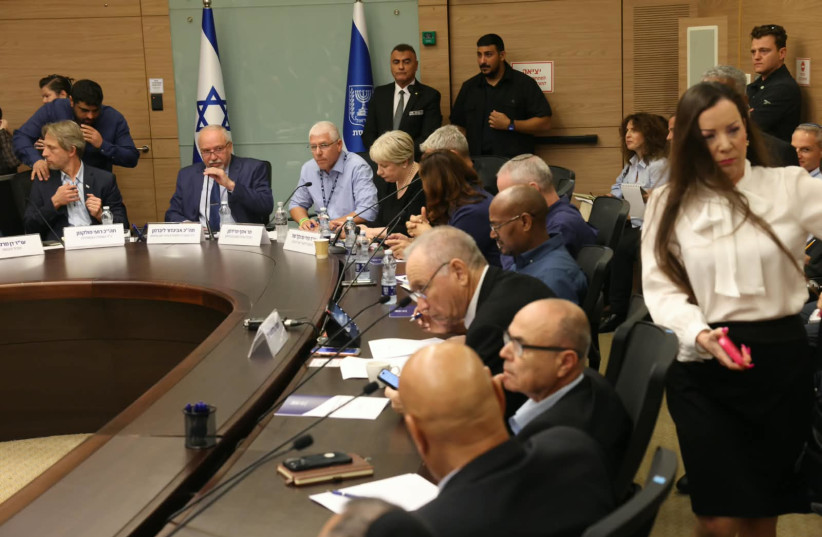
The haredi parties, Shas and United Torah Judaism (UTJ), had repeatedly pushed against legislation to draft haredim into the IDF amid the military’s severe manpower crisis while they were part of Prime Minister Benjamin Netanyahu's outgoing coalition.
Liberman was appointed temporary chairman in an FADC vote, with eight members voting in favor and none against. The FADC oversees national security matters, military budgets, and legislation related to IDF conscription.
Liberman summons heads of Israel's security establishment
The Yisrael Beytenu chief also said he intends to summon the heads of the security establishment to the committee - IDF Chief of Staff Eyal Zamir, Mossad Director Roman Gofman, Shin Bet chief David Zini, and Israel Police commissioner Danny Levi.
Liberman said he would request clarification on the ongoing investigation into suspected election interreference following what he described as "unreasonable and illogical" gaps between the police and the Shin Bet on the probe.
"There are far too significant gaps between the police and the Shin Bet, gaps that are unreasonable and illogical," he said. "We will also examine the issue of foreign interference, particularly with regard to the Prime Minister's Office and attempts to influence the elections," Liberman added.
"At the same time, we must first and foremost focus on those serving in the military – soldiers in the regular army, the reserves, and the career military."
He also said he would seek answers regarding the Prime Minister’s Office alleged attempt to influence the election, following the investigative report published on Channel 12's Uvda on Sunday night.
Defense Minister Israel Katz said on Monday that he will not automatically approve summonses for Zamir and other military officers to appear before the Knesset's FADC, following Liberman's appointment.
"I will not allow the committee to be turned into a stage for a political circus, nor into a tool for bashing the IDF and the government," Katz said. "I will approve summonses on a purely substantive and professional basis, following prior review and coordination."
Liberman's temporary appointment to the committee comes after Netanyahu's bloc lost its parliamentary majority to the bloc led by Eisenkot following the elections.
Although a new government has yet to be formed, the Eisenkot-led bloc has secured crucial appointments to Knesset committees, as it seeks to advance key legislation and repeal laws passed by Netanyahu's outgoing coalition in the period before a new government is formed.
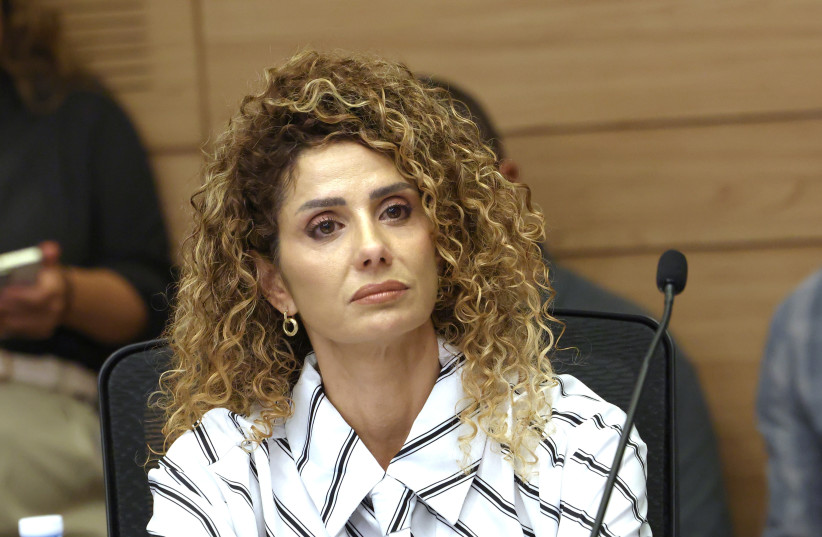
B'Yachad's Ben-Horin approved as head of Knesset's Finance Committee
B’Yachad MK Liran Avisar Ben-Horin was also approved on Monday by the Knesset Finance Committee to serve as its temporary chairperson.
The bloc led by Eisenkot has also been working to replace Knesset Speaker Amir Ohana, with a vote expected to take place on Tuesday.
Ousting Ohana, a member of Netanyahu’s Likud, would give the Eisenkot-led bloc greater control over the Knesset’s legislative agenda before a government is formed.
Last week, the first Knesset plenum vote since the swearing-in of the 26th Knesset demonstrated the Eisenkot-led bloc’s ability to secure a parliamentary majority.
The election results showed that Eisenkot's bloc received 67 seats, including 19 from the Arab parties, while Netanyahu’s bloc won 53.
Eisenkot was granted the mandate by the president last week and tasked with forming the next government, giving him a total of 28 days to do so, with the option of requesting a 14-day extension.
No government has been formed yet as most party leaders have drawn a red line against partnering with the Arab parties. Nevertheless, Arab party support could still allow the bloc to pass key legislation even while Netanyahu heads a caretaker government.
Ahead of the elections, Liberman had taken a hardline stance against partnering with the haredi parties, demanding legislation to draft all haredim into the IDF.
However, he has recently softened his position, expressing a willingness to work with the haredi parties to form a government, rather than with the Arab parties. The haredi parties have been key partners in Netanyahu's coalition, making it unclear if they will agree to join a government led by Eisenkot.
Following Liberman's appointment as FADC chairman, Netanyahu reiterated his recent calls for a unity government, stating that any government formed would continue to partner with the haredi parties and work toward mutually agreed-upon legislation.
"In any government that is formed, we will stand together with our haredi partners and establish, through mutually agreed legislation, the status of Torah students," Netanyahu said.
Netanyahu's outgoing coalition had faced criticism over the legislation it advanced, with opponents arguing that it would not enforce haredi conscription and was instead an attempt to appease the haredi parties, which had threatened to halt coalition votes over the issue and had also withdrawn from the government.
Jonah Davidov contributed to this report.