Israel has barred two senior figures from France's far-left La France Insoumise (LFI) party from entering the country, in a retaliatory move following France's decision to deny entry to Samaria Regional Council head Yossi Dagan.
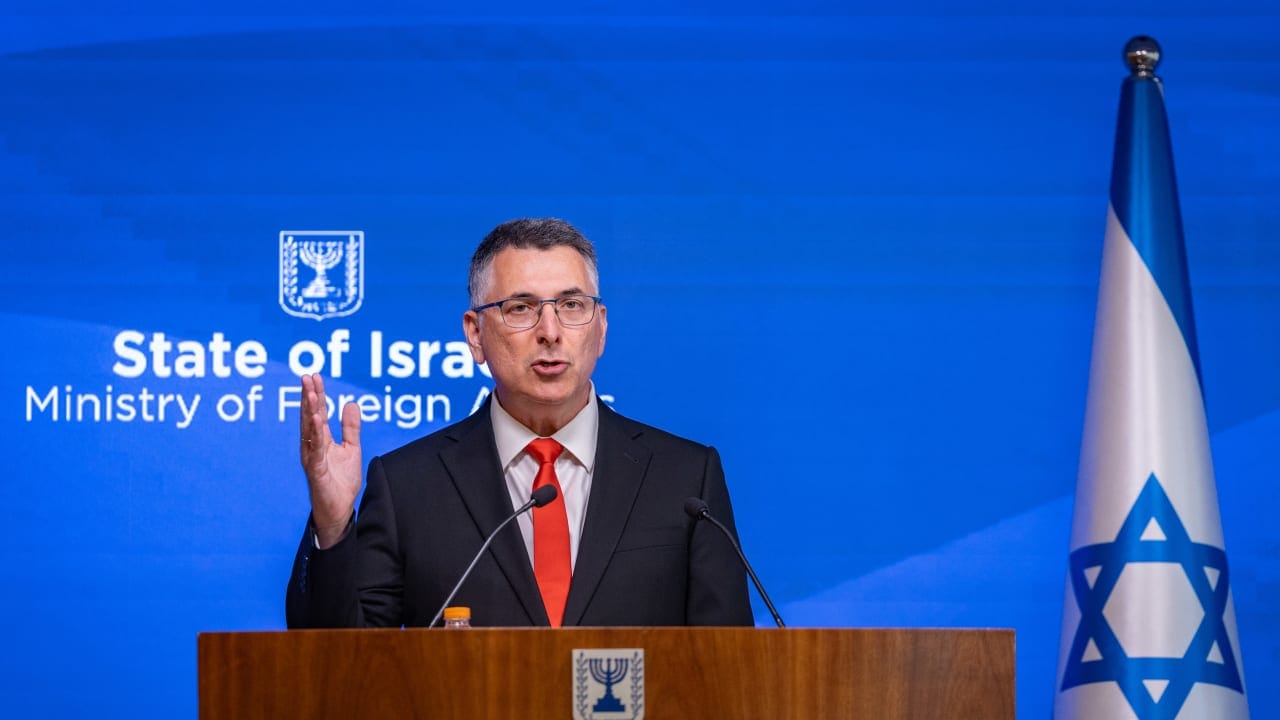
Foreign Minister Gideon Sa’ar, who also serves as interior minister, announced Thursday that LFI leader Jean-Luc Mélenchon and Mathilde Panot, who heads the party's parliamentary faction, would be denied entry to Israel.
The decision follows a move by French authorities last week to bar Dagan, who heads the Samaria Regional Council in the northern West Bank, from entering France.
A French Foreign Ministry official told The Jerusalem Post that Dagan was subject to an administrative ban "due to his active role in implementing the settlement policy in the West Bank".
In announcing the restrictions, Israel's Foreign Ministry cited what it described as LFI's “extreme anti-Israel policy” and condemned statements made by senior party officials, including Mélenchon and Panot.

Mélenchon calls for French naval escorts for Gaza flotillas
Mélenchon, a prominent figure on France's far left, has increasingly made Israel a focus of his political agenda ahead of the country's 2027 presidential election.
Speaking at an LFI convention on November 7, Mélenchon pledged that a government led by his party would pursue a more confrontational policy toward Israel, including the possible deployment of French naval vessels to escort pro-Palestinian flotillas seeking to reach the Gaza Strip.
“We will act head-on to help the Palestinians, not only against the genocide in Gaza, but against the gradual annexation of the West Bank,” Mélenchon said.
“French ships, like those of Italy and Spain, if necessary, will escort the flotillas of mobilized citizens to assert the rights of the people,” he added.
LFI's newly released presidential platform also calls for sanctions against Prime Minister Benjamin Netanyahu's government and the suspension of the European Union's Association Agreement with Israel, which governs political and economic relations between Israel and the EU.
The platform also proposes exploring alternatives to the traditional two-state solution to the Israeli-Palestinian conflict, including the possibility of a binational state based on equal rights.
French far-left party faced criticism over response to October 7 massacre
Mélenchon and his party have faced criticism over their response to the Hamas-led October 7, 2023, massacre in southern Israel.
On the day of the attacks, Mélenchon wrote on X that “violence only produces and reproduces itself.”
An initial statement issued by LFI described the massacre as an “armed offensive by Palestinian forces led by Hamas,” framing the violence in the context of Israeli policies in the Palestinian territories.
The party subsequently drew criticism for refusing to explicitly designate Hamas as a terrorist organization. It eventually condemned the October 7 attacks as a terrorist act on the first anniversary of the massacre in October 2024.
Thursday's announcement marks a further escalation in diplomatic tensions between Israel and France, with the Israeli government framing its decision as a response both to the restrictions imposed on Dagan and to what it considers hostile rhetoric and policies promoted by LFI leaders.
“Israel will respond firmly to anyone who harms it and will not allow entry to individuals who act and incite against it and its citizens,” the Israeli Foreign Ministry said.