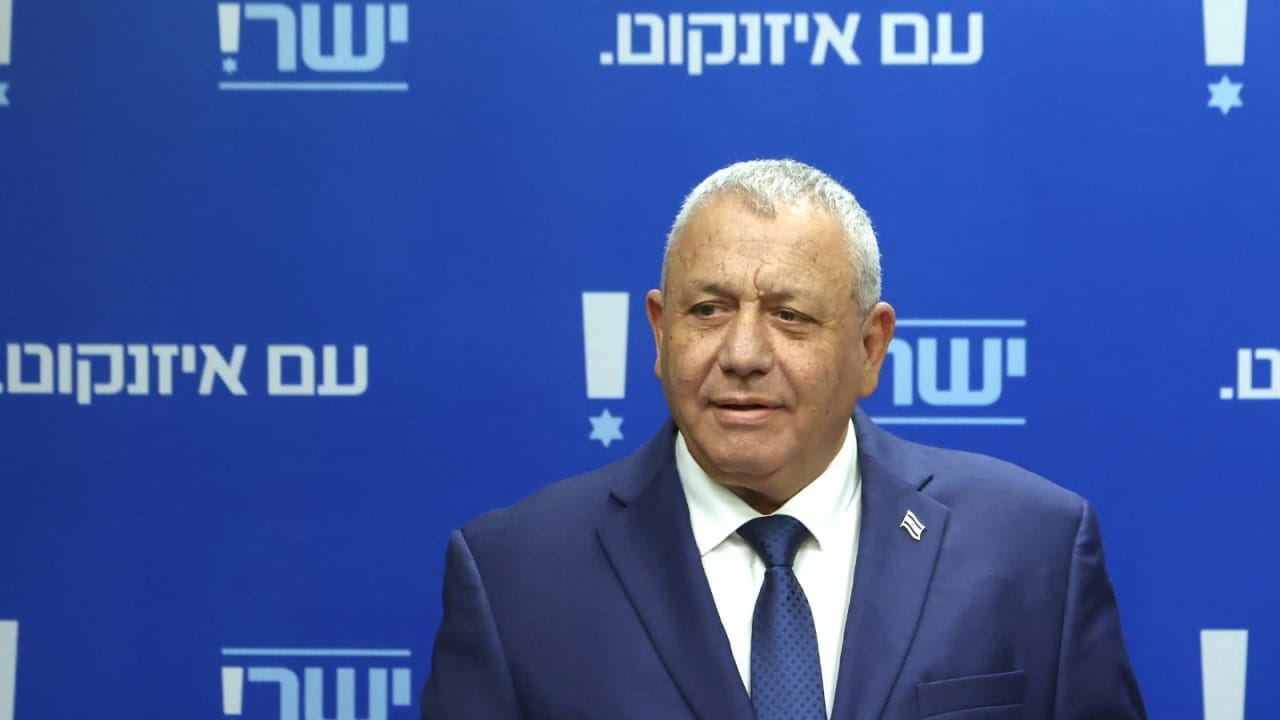
Yashar's chairman Gadi Eisenkot confirmed on Friday that he doesn't intend to drag out negotiations beyond the time given by President Isaac Herzog to form a government, saying that he will try to make agreements with the haredi (ultra-Orthodox) sector and Likud but would form a minority government if those efforts don't succeed.
"All sides need to understand that I do not intend to drag this out. They need to understand that, at the right time, I will bring a new and good government under my leadership to the Knesset for approval," Eisenkot wrote in a social media post shared on X/Twitter before Shabbat.
"This is not a threat for negotiating purposes. It is the decision I have made out of an understanding of the responsibility and role placed upon me at this time of emergency," he added.
Eisenkot's strategy to form a government
Eisenkot also said that he has two additional tracks to form a government before going for the minority option, which include the haredi parties and Likud.
"With the Haredi parties, we are engaged in serious discussions aimed at finding solutions and formulas that will strengthen the IDF, meet security needs, and preserve the status of Torah scholars, as we promised during the election campaign," he said.
He also said that the party is "making sincere, genuine efforts" to form a unity government, but blamed Likud for having "a wide gap between the rhetoric and the actions and actual willingness of Likud."
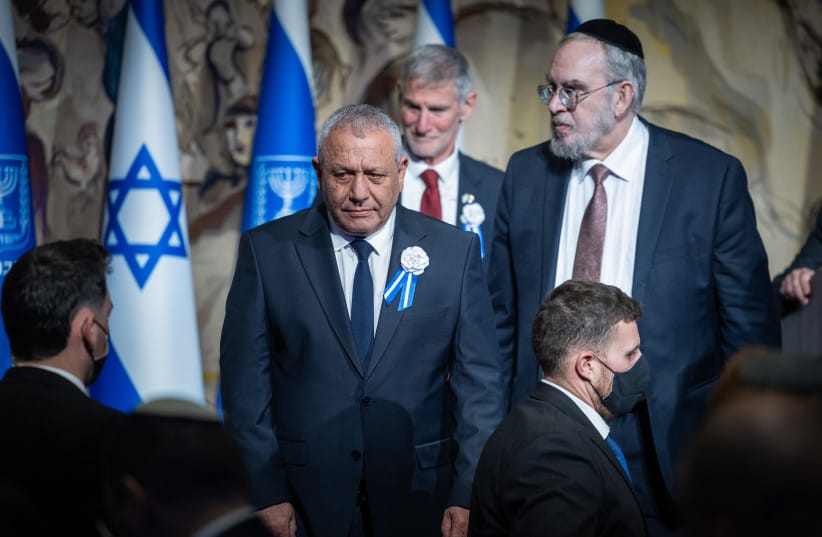
Eisenkot then warned that negotiations are "not a political arrangement, but an expression of partnership and shared values. Anyone who ignores this is betraying the truth and misleading a public that genuinely, wholeheartedly, would like to see unity."
He also announced that he intends to give the negotiations with Likud another chance, adding that the end goal would be to form the broadest possible coalition.
December 6 will be deadline to form coalition
If negotiations with the haredi parties or talks over a unity government fail, Yashar intends to bring a minority government to a Knesset confidence vote before December 6, when Eisenkot's mandate to form a government expires.
The proposed government would rely on external support from Ra'am (United Arab List) and the Joint List, according to political sources.
"We will not wait for the mandate to pass to Netanyahu and then from him to the Knesset," Yashar officials said. "If there is no other government, we will bring the minority government to a vote in any case before the mandate expires, before December 6."
The main reason behind this is the security situation, with party officials saying that Israel needs a permanent and stable government rather than the continued operation of a caretaker administration.
What happens next?
Under Basic Law: The Government, the candidate selected by Herzog, in this case Eisenkot, has 28 days to form a government from the day he received the mandate, and the president may grant an extension of up to 14 additional days if necessary.
If the candidate fails to form a government within the allotted time, informs Herzog that the effort has failed, or presents a government that fails to win a confidence vote, the president must decide within three days whether to assign the task to another MK or inform the Knesset speaker that he sees no possibility of forming a government.
A second candidate would then have 28 days to establish a coalition, without the possibility of an extension.
If the second attempt also fails, or Herzog decides not to appoint another candidate, a 21-day period begins during which at least 61 MKs can jointly request that the president assign the task to a particular lawmaker. That candidate would have 14 days to form a government.
Should all attempts fail, the Knesset would be dissolved, and another election would be held. Until a new government wins the Knesset's confidence and takes office, the outgoing government remains in place in a caretaker capacity.
Shir Perets and Anna Barsky contributed to this report.