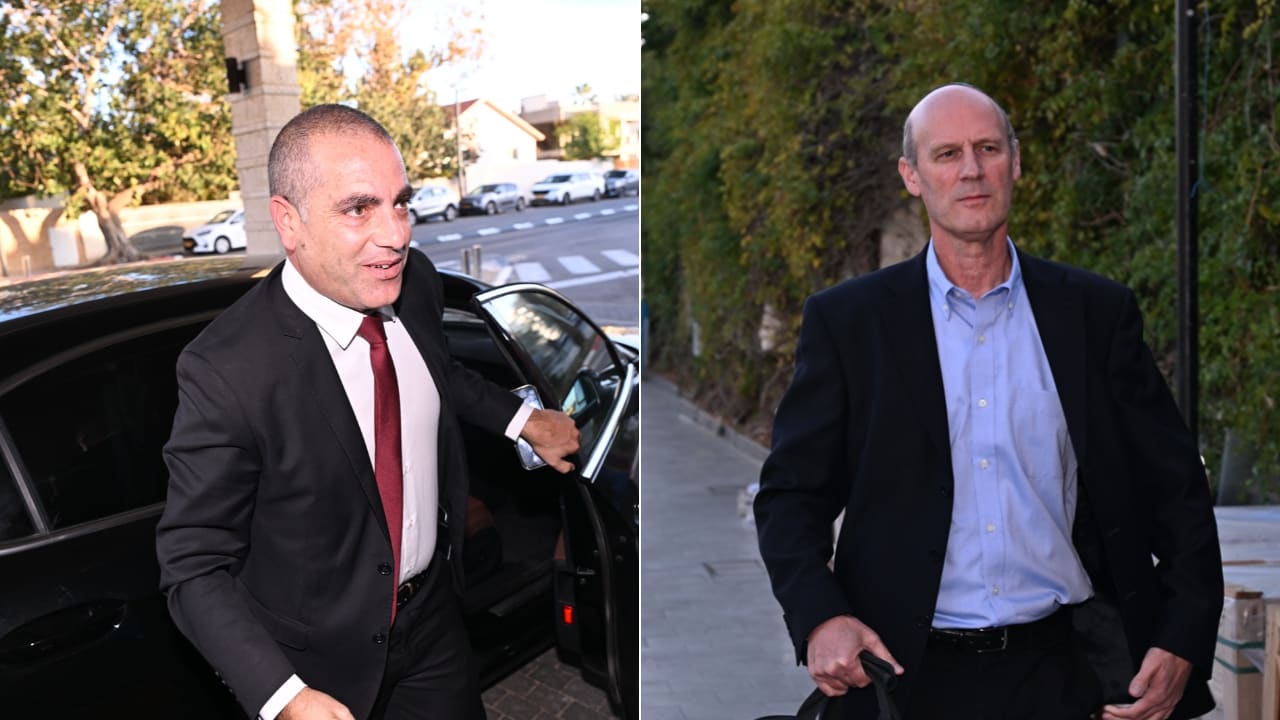
Representatives from Prime Minister Benjamin Netanyahu’s Likud party and the bloc led by Yashar leader Gadi Eisenkot met on Sunday afternoon for coalition talks aimed at discussing the possibility of forming a unity government.
After the meeting, Likud and Yashar issued a joint statement saying that the meeting between representatives of the two parties, along with the B’Yachad party, had been “businesslike” and that “it was agreed that dialogue between the parties would continue.”
Although the brief statement did not provide further details, it was issued jointly, indicating that there was overall cooperation between both sides. According to a Channel 12 report, the party representatives held only an initial meeting and did not delve into the issues in depth.
Eisenkot's four principles to join his coalition
The Likud meeting with Yashar comes as Netanyahu has repeatedly called for a unity government after his bloc lost its parliamentary majority to the bloc led by Eisenkot following the October 27 elections.
Eisenkot, meanwhile, has drawn a red line against sitting in a government led by Netanyahu and laid out four key principles that MKs must accept if they wish to join his coalition.
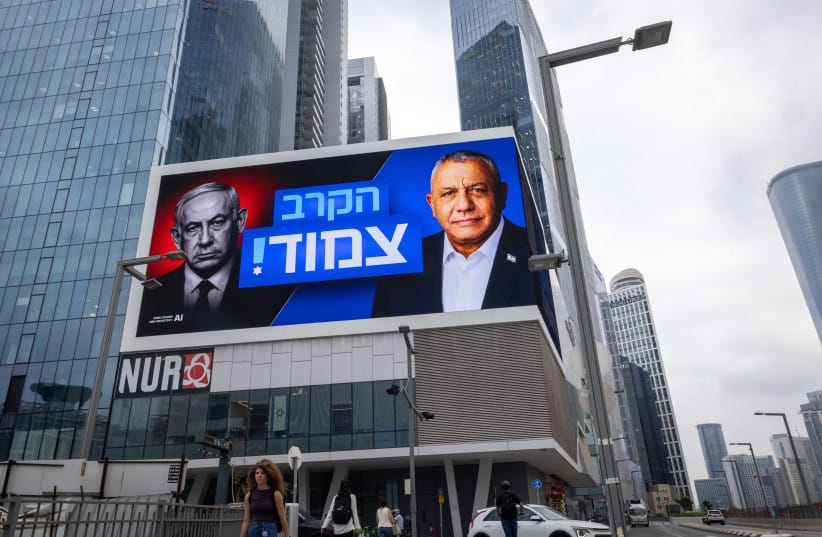
Ahead of the meeting, Eisenkot released a statement on his position regarding unity, stating that “unity is not a political convenience or something intended to create an appearance of stability.”
“Unity is a question of shared values that advance things together and of substance,” the Yashar party leader added.
Likud and Yashar announced their representatives for the negotiations ahead of the meeting.
Likud said MK Ofir Katz and Michael Rabello, Netanyahu’s former personal attorney, who recently withdrew his candidacy for state comptroller amid controversy over the integrity of the election process, would represent the party. Yashar appointed MK Chili Tropper and Yoav Horowitz as its representatives.
Yashar also invited Likud MK Elisha Medan, who set up a tent outside the Knesset on Saturday calling for a unity government, to participate in the discussions, although he did not attend.
On Sunday afternoon, ahead of the meeting, Netanyahu visited Medan at the tent outside the Knesset, continuing to call for a unity government.
B’Yachad party leader Naftali Bennett sent a representative, Shalom Shlomo, to join the meeting, Eisenkot’s spokesperson confirmed to The Jerusalem Post.
Bennett and other leaders in the bloc seeking to replace Netanyahu – Democrats chairman MK Yair Golan, and Yisrael Beytenu chairman MK Avigdor Liberman – had ruled out joining a unity government led by Netanyahu.
Golan calls for holding those responsible accountable for October 7
Other figures from the Eisenkot-led bloc also held meetings on Sunday. Outgoing opposition leader Yair Lapid, who holds the second spot on the B’Yachad party list, said he met with Golan on Sunday.
“The two discussed coordinating their efforts ahead of the formation of a government that would be good for Israel,” Lapid’s office said in a statement.
There were also reports of a meeting held between Golan and Liberman.
Golan has pushed for the Arab parties, Ra’am and the Joint List, to be included in the next government. While Liberman has held a hard-line stance against doing so.
On Sunday, ahead of the meeting, Golan called on the bloc to “lead a change in the rules of the game” and meet with the leaders of the Arab parties.
He called on the Eisenkot-led bloc to “examine partnerships on a substantive basis, and stop allowing Netanyahu and his poison machine to determine who is legitimate and who is not.”
The Democrats' leader criticized unity talks with Netanyahu, arguing that the bloc should instead focus on building alternative partnerships.
“The path to change does not go through talks about unity with Netanyahu and Likud – those responsible for the October 7 massacre, the judicial overhaul, and the destruction of the rule of law. It goes through building a partnership that will enable them to be replaced and repair what they have destroyed,” Golan said.
“There has been a clear democratic decision – it is time to listen to the will of the voters, rather than dance to Netanyahu’s tune of racism,” he added.
The October 27 election results showed that the bloc seeking to replace Netanyahu won 67 seats, including 19 held by the Arab parties, while Netanyahu’s bloc secured 53 seats.
No government has been formed yet, however, as some party leaders have drawn a red line against partnering with the Arab parties. Nevertheless, Arab party support could still allow the bloc to pass key legislation even while Netanyahu heads a caretaker government.
Party leaders in the Eisenkot-led bloc have also recently opened the door to coalition negotiations with the haredi (ultra-Orthodox) parties after previously ruling out a partnership with them, offering an alternative path to forming a government amid the political deadlock.
Eisenkot received the mandate from President Isaac Herzog last week and was tasked with forming the next government. He was granted 28 days to do so, with the option of requesting a 14-day extension.
The Eisenkot-led bloc has also been working to replace Knesset Speaker Amir Ohana, a member of Netanyahu’s Likud party, with a plenum vote expected to take place on Tuesday.
Ousting Ohana would give the bloc seeking to replace Netanyahu greater control over the Knesset’s legislative agenda before a new government is formed.
The Eisenkot-led bloc has already submitted bills it intends to advance, alongside plans to repeal legislation passed by Netanyahu’s outgoing coalition.