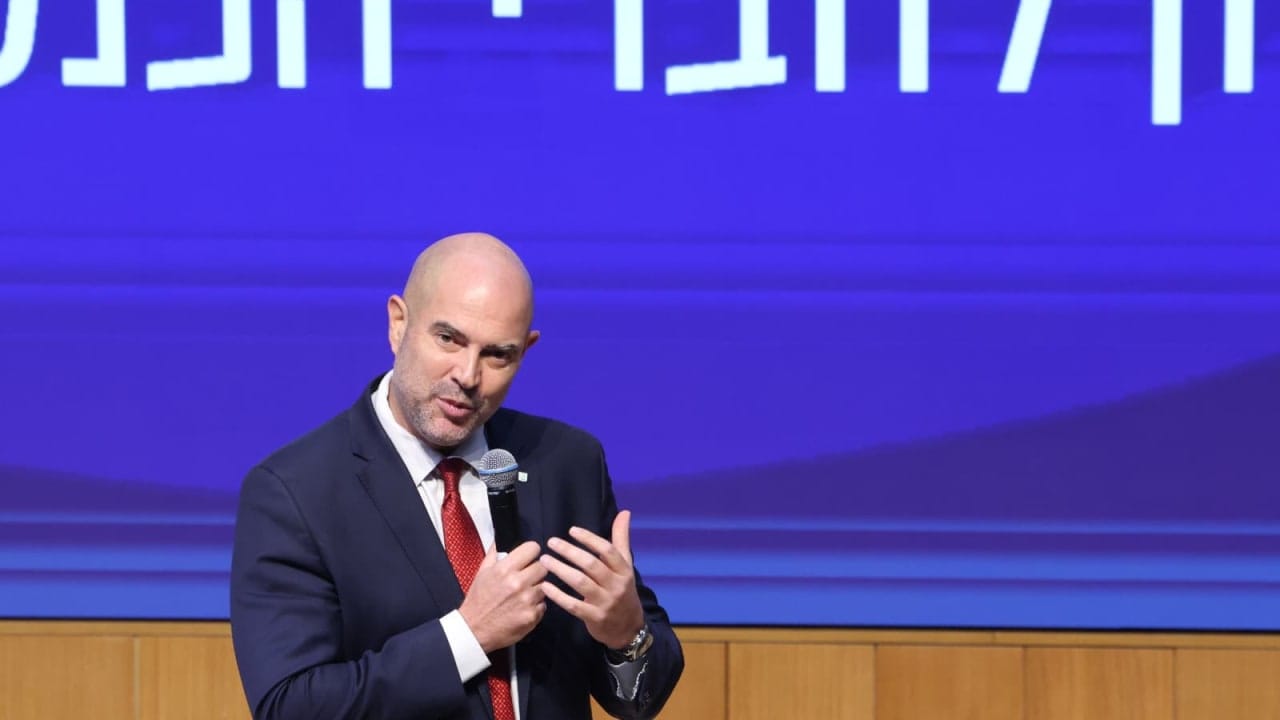
The Yashar party, led by Gadi Eisenkot, invited the haredi (ultra-Orthodox) parties Shas and United Torah Judaism (UTJ) on Monday to join the opposition bloc’s effort to replace Knesset Speaker Amir Ohana during Tuesday’s inaugural session of the 26th Knesset.
After Yashar’s request, UTJ party chairman MK Yaakov Asher said his party would not support efforts to replace Ohana before a new government is formed.
“United Torah Judaism’s principled position is that the replacement of the Knesset speaker should take place simultaneously with the formation of a new government, rather than upon the convening of the Knesset,” Asher said in a statement.
“Our position is that this is the appropriate and customary practice as it has been in the past, with very few exceptions. This is intended to prevent an absurd situation in which a Knesset speaker could be elected who would be opposed to the government that is formed.”
At least 61 MKs must formally sign a request or vote to replace the speaker of the Knesset.
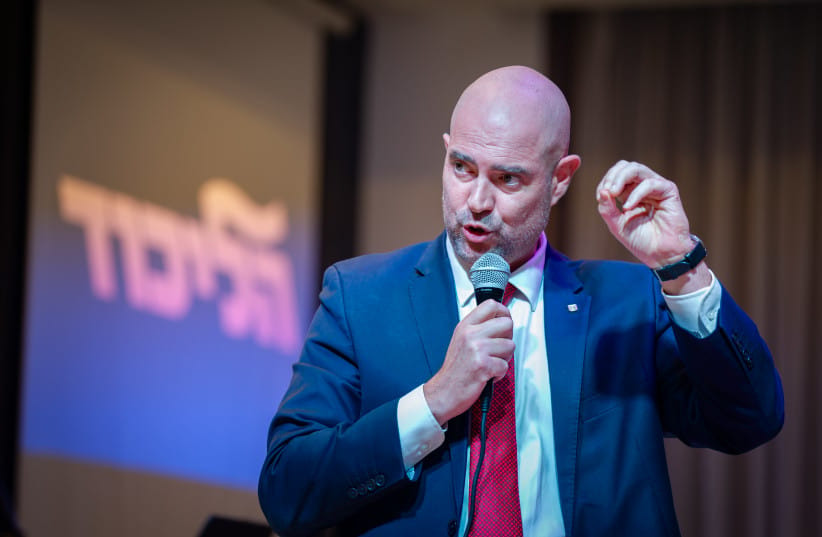
Replacing the Knesset speaker earlier would give the opposition bloc more time to advance its legislative agenda.
Replacing Ohana, a member of Prime Minister Benjamin Netanyahu’s Likud party, would give the bloc greater control over the parliamentary agenda, including votes, legislation, and committee appointments, even if Netanyahu remained in office as head of a caretaker government.
Ohana said last week that he would not hold a vote to replace the Knesset speaker on the day of the inaugural ceremony but instead would schedule it for the following week if a formal request with sufficient support was submitted.
Incoming MK Roy Folkman, who chairs Yashar’s Knesset faction, sent letters to the heads of Shas and UTJ, inviting them to join the effort. The process of collecting signatures ahead of submitting the formal request is already underway, Yashar stated.
The move also signals the opposition bloc’s willingness to work with the haredi parties, and it comes as party leaders in the bloc have recently opened the door to negotiations with them.
The opposition bloc had previously drawn a redline against partnering with the haredi parties, but has now presented doing so as an alternative path to forming a government amid the political deadlock between the opposition and Netanyahu’s camp, following the October 27 election.
The Sephardi party, Shas, has not openly expressed its intention to partner with the opposition bloc and has instead recommended Netanyahu to the president last week as its candidate to form the next government.
This contrasts with the Ashkenazi UTJ, which abstained from recommending a candidate to President Isaac Herzog, despite having long been a key coalition partner of Netanyahu’s. There had been reported tensions between UTJ and the prime minister over legislation concerning the haredi draft during the previous government’s term.
Eisenkot calls on opposition leaders to form 'national emergency gov't'
Eisenkot has said that he is open to partnering with MKs from other parties as long as they support the four principles he recently laid out.
He has called on the opposition bloc to act quickly to form a “national emergency government” and pursue parliamentary measures, including replacing the Knesset speaker immediately after the new Knesset is sworn in. He has also said that once the new Knesset is sworn in, he plans to repeal laws that “threaten democracy.”
Meanwhile, the opposition bloc has yet to agree on who should replace Ohana. Party leaders concluded their last joint meeting without reaching a consensus and set Monday as the deadline for a decision, ahead of the Knesset’s swearing-in.
Under one proposal being considered, Eisenkot would be Knesset speaker and resign if he succeeded in forming a government and became prime minister. If he failed to form a government, Eisenkot could remain in the position and retain influence over the parliamentary agenda.
Yisrael Beytenu leader Avigdor Liberman announced last week that he would support B’Yachad’s Yair Lapid for Knesset speaker over Eisenkot.
However, Liberman met with Eisenkot on Monday, where the two reportedly discussed the matter and agreed on who the opposition bloc’s candidate for Knesset speaker should be.
The selected candidate is expected to be Eisenkot or someone acting on the Yashar leader’s behalf, according to a N12 report on Monday. The candidate’s identity is expected to be officially announced soon by the party after being presented to the other leaders of the opposition bloc for approval, the report added.
The opposition bloc will then be able to submit the request to replace the Knesset speaker and will reportedly do so on Tuesday.
Following the meeting between Eisenkot and Liberman, Yashar stated that the two had held “a substantive and positive meeting.”
“The two expressed their full confidence in their ability to form a stable government for four years,” the party’s statement noted.
The official statement did not address whether an agreement had been reached within the bloc on its candidate for Knesset speaker. Eisenkot’s spokesperson told The Jerusalem Post that it would not comment further on what took place during the meeting.
Liberman has faced recent criticism for his openness to joining a coalition with the haredi parties after previously taking a hardline stance against doing so ahead of the election and demanding legislation to draft haredim into the IDF amid the military’s severe manpower shortage, which forces the IDF to rely heavily on reservists.
The haredi parties in Netanyahu’s outgoing coalition had repeatedly pushed against the passage of such legislation while threatening to halt coalition votes if the contentious bills they sought to pass were not advanced quickly enough throughout the government term.
Eisenkot officially received the mandate to form a government from President Isaac Herzog on Sunday during an official ceremony at the President’s Residence, as the opposition bloc continued its efforts to secure coalition partners and replace Netanyahu.
The Yashar leader said at the ceremony that “creative and unconventional political steps” would be required to form a government, reiterating his call for a “national emergency government.”
The opposition bloc lacks the 61-seat Knesset majority required to form a government. The election results showed that Netanyahu’s bloc secured 53 seats in the next Knesset, while the opposition bloc won only 48.
The political deadlock could ultimately lead to another election, although the parties can still reach an agreement through coalition negotiations.
By law, Eisenkot has 28 days to form a government, starting Sunday, and the president may grant an extension of up to 14 additional days, if necessary.
Other possible outcomes include the possibility of a unity government between Netanyahu and members of Eisenkot’s bloc, as well as the formation of a minority government – in which the government would rely for support on parties that are represented in the Knesset but are not cabinet members, such as via votes in favor or abstentions.