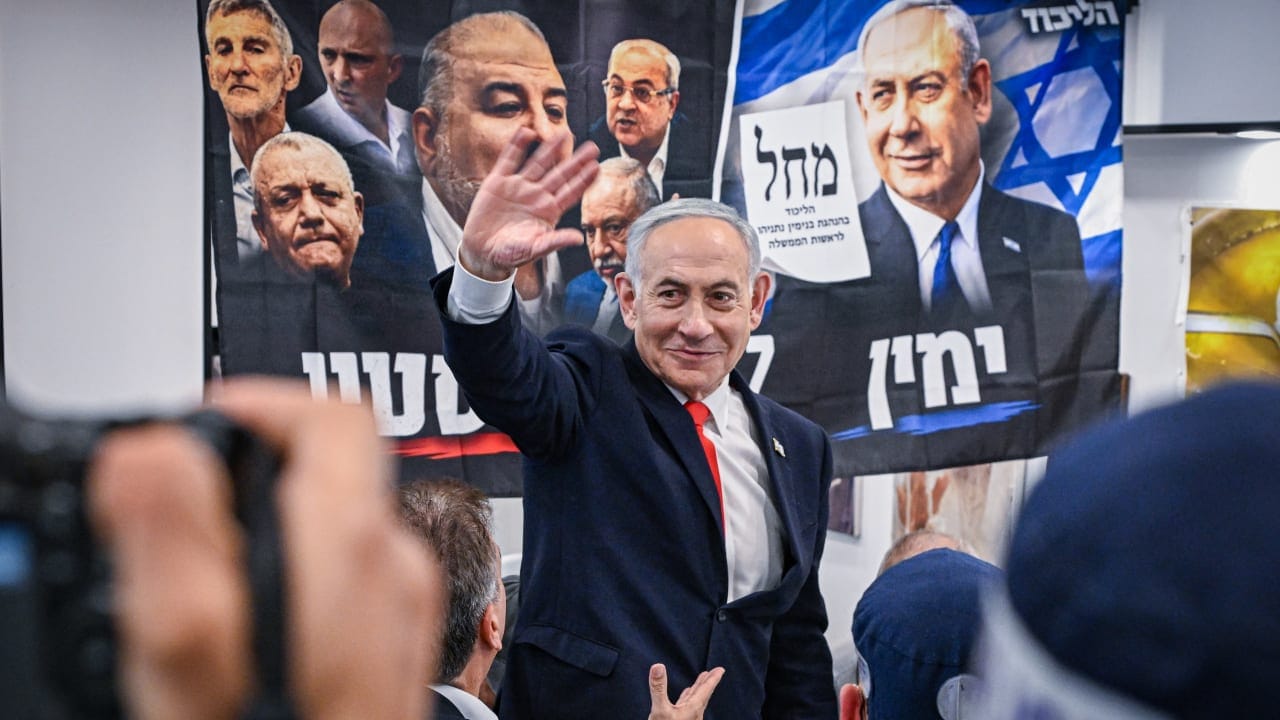
Central Elections Committee chairman Noam Sohlberg on Sunday rejected a petition to block a discussion between Prime Minister Benjamin Netanyahu and Police Commissioner Danny Levy, while stressing that Netanyahu and National Security Minister Itamar Ben-Gvir have no authority to direct police on election integrity or preparations.
The decision came two days before Tuesday’s Knesset election, after Netanyahu told Sohlberg that the planned discussion was a telephone briefing on security threats, rather than election integrity as earlier reports had described it.
Levy subsequently met with Netanyahu, with the heads of the police’s Operations Directorate and Intelligence Division also attending. “The police will do everything in their power to safeguard Israeli democracy,” Levy told Netanyahu, adding that officers were prepared to respond to terrorist incidents and maintain public order.
Bochrim BeYisrael subsequently asked Sohlberg to reconsider, citing a clarification submitted on Netanyahu’s behalf that the meeting would take place in person, rather than by telephone. The organization argued that this changed a premise underlying the decision and heightened concerns about election campaigning.
It sought an immediate order blocking the meeting or, alternatively, a requirement that it take place under Sohlberg’s oversight with all party leaders invited. The request also sought a full account from Levy of the meeting’s contents if it had already taken place.

Sohlberg said the prime minister and national security minister could meet with the commissioner about general public-order issues and ask him to present police preparations. But responsibility for administering the election and safeguarding its integrity rests with the Central Elections Committee and its chairman, he emphasized.
The petition was brought by the organization Bochrim BeYisrael, separately from Gadi Eisenkot’s Yashar party’s appeal earlier Sunday to Attorney-General Gali Baharav-Miara and Sohlberg to stop the meeting.
Filed at 9:30 a.m., ahead of a discussion scheduled for 11 a.m., the petition argued that the meeting would violate prohibitions on interfering with elections and using public resources for election campaigning.
Sohlberg found insufficient evidence that holding a discussion between Netanyahu, Ben-Gvir and Levy would itself constitute interference with the election. He also explained that challenges to how public authorities exercise their official responsibilities generally do not provide grounds for a petition under the prohibition on using public resources for campaigning.
He nevertheless recorded Netanyahu’s assurance that the call would not address election preparations or election integrity, and said all those involved were expected to take particular care not to exceed their authority on election matters.
Netanyahu argues call concerns 'routine security preparations'
In the response submitted on Netanyahu’s behalf by attorney Ilan Bombach, the prime minister argued that the call concerned routine security preparations against what the filing described as serious warnings of terrorist attempts to disrupt the election or influence its conduct.
The response said Netanyahu had held a security assessment on Thursday with the IDF chief of staff and the heads of the Shin Bet (Israel Security Agency) and Mossad. Levy had not attended, it said, and the telephone briefing was intended to complete that discussion by obtaining an update on police preparations.
Netanyahu’s responsibility for national security did not diminish because an election was approaching, the filing argued. It also invited Sohlberg to send a committee representative to the discussion to observe its security focus.
Baharav-Miara, whose position was summarized in the decision, said police act in coordination with and under the direction of the elections committee chairman on election administration and public order during voting. Political leaders and candidates should not intervene in those matters, she said.
Sohlberg noted that he and the committee’s acting director-general were due to meet Levy that evening to discuss police preparations for the election and issue decisions and instructions as needed.
The ruling followed criticism from Yashar, who warned that the planned meeting could undermine public confidence in the results. The party argued that Netanyahu was himself a candidate and had no authority over the commissioner on election integrity.
“The unusual meeting raises concern about an attempt to create a false impression that election integrity has been compromised, without any basis, in order to undermine public confidence in the results in advance,” the party said.

Ben-Gvir's office defends Netanyahu-Levy meeting
Ben-Gvir’s office also defended the meeting, saying briefings on police election preparations were routine practice followed by previous ministers. Citing the state commission of inquiry into the Meron disaster, it argued that the minister had a duty to question police preparations, identify gaps and prevent loss of life.
A meeting between the prime minister, national security minister and police commissioner was “entirely routine and legitimate,” his office said.