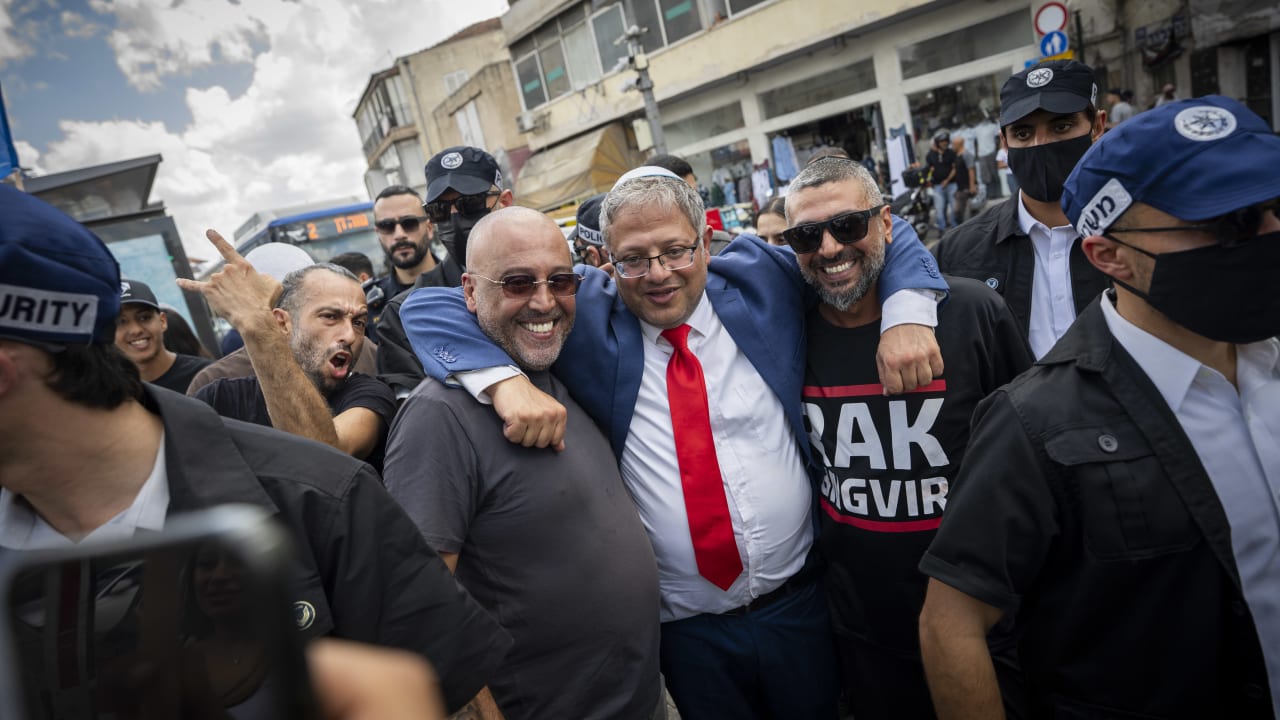
Otzma Yehudit, founded in 2012, is one of many parties vying for citizens’ votes in the elections for the 26th Knesset, which will be held on October 27.
The party, whose name translates to “Jewish Power,” is led by National Security Minister Itamar Ben-Gvir and is consider the farthest-Right party in the Israeli political spectrum. It has its roots in the political movement founded by students of Rabbi Meir Kahane.
In the 2022 election, Otzma Yehudit ran as part of a joint list with Finance Minister Bezalel Smotrich’s Religious Zionist Party and Noam, led by MK Avi Maoz. The list won 14 seats, with six allocated to Otzma Yehudit.
For the 2026 election, however, Ben-Gvir chose to run separately from Smotrich, arguing that the two parties appeal to fundamentally different electorates. Prime Minister Benjamin Netanyahu later called on them to reunite, but Ben-Gvir rejected the proposal.
Its Knesset list, finalized in September, has Ben-Gvir first and followed by former Likud MK Tally Gotliv, who joined Otzma Yehudit after a public falling-out with Netanyahu. Gotliv had accused Netanyahu of sabotaging her bid in the Likud primaries, leading to her exit from Israel's ruling party.

She is followed by Development of the Negev and Galilee and National Resilience Minister Yitzhak Wasserlauf, Heritage Minister Amichai Eliyahu, MKs Limor Son Har-Melech and Yitzhak Kreuzer, and newcomers Hanamel Dorfman and Tzahi Eliyahu.
Otzma Yehudit is currently polling at around eight-to-10 seats.
Ben-Gvir's ambitions - and Otzma Yehudit's red lines
Otzma Yehudit's clearest political red lines have concerned the composition of any future government, particularly the inclusion of parties outside Netanyahu's right-wing camp.
Ben-Gvir has opposed a unity government that would bring opposition parties into a coalition with the current right-wing bloc. During the election campaign, he accused Netanyahu of planning to form a “left-wing government” with his main political opponent, Gadi Eisenkot's Yashar party, while excluding Otzma Yehudit.
He has also sought to prevent Arab parties from entering the next Knesset. Ben-Gvir recently petitioned the Central Elections Committee to bar Ra'am and its leader, Mansour Abbas, from running in the upcoming elections, referring to the party as “Hamas-supporting terrorists” and “wolves in sheep's clothing.”
Where Otzma Yehudit stands on Gaza, the West Bank, and Palestinian statehood
Otzma Yehudit's political platform is overwhelmingly focused on Israel's immediate security environment, with Gaza, terrorism, and Israeli control over security policy among the party's central issues.
According to Ben-Gvir, the party's central mission for the next Knesset is to pursue a harder-line security policy, particularly regarding Gaza and terrorism. Otzma Yehudit's members consistently frame the party's approach around Jewish national sovereignty, a forceful response to terrorism, expanded backing for soldiers and police, and opposition to the establishment of a Palestinian state.
Ben-Gvir has argued that Israel should move from what he calls a policy of “containment” to offensive action against terrorism. In 2023, the party boycotted coalition activity over what it described as the government's insufficient response to terrorism and its “containment policy.”
Gaza has been one of the central issues in Ben-Gvir's security platform. He has called for a substantially more aggressive military response, saying in August that Israel should carry out nightly strikes killing dozens of Gazans.
Ben-Gvir has argued that Israel should seek a complete military victory rather than agreements that leave Hamas in place. He has previously opposed ceasefires and hostage agreements that he believes leave Hamas intact and has advocated for a complete Israeli military victory.
Ben-Gvir and Otzma Yehudit have repeatedly challenged government decisions they considered insufficiently aggressive toward Hamas or other terrorist organizations. In 2025, for example, the party temporarily left the coalition over a hostage-ceasefire agreement and returned only after the government resumed military operations in Gaza.
In September 2026, Ben-Gvir unveiled the “Disengagement 710” plan, which calls for encouraging the voluntary emigration of Gaza residents and establishing a government ministry to implement the policy. The proposal envisions 250,000 departures during the first year and 1.86 million over seven years.
Regarding the West Bank and the issue of Palestinian statehood, Ben-Gvir and Otzma Yehudit have repeatedly pushed for security policies centered on Israeli control rather than negotiations leading to Palestinian statehood. Additionally, Ben-Gvir's political camp has expressed consistent support for extending Israeli sovereignty over territory claimed as part of the Land of Israel.
Ben-Gvir's positions have at times put him at odds with the government's diplomatic considerations. His opposition to ceasefires and hostage agreements, as well as his positions on Gaza, have generated tensions with Israel's international partners.

Ben-Gvir's domestic agenda and push for political power
Beyond security and foreign policy, Otzma Yehudit has used its position in government to push changes to the justice system, strengthen its political influence, and advance its vision of Jewish sovereignty.
The party's record in government has largely reflected those priorities.
Ben-Gvir has supported the government's 2023 judicial reform and opposed efforts to soften the legislation. After the Knesset passed the law limiting the courts' use of the reasonableness standard in July 2023, the first major judicial-overhaul law passed as part of the reform, he called its passage “just the beginning” and said the remainder of the reform should pass.
The national security minister has also supported changing the way judges are selected, while Otzma Yehudit has sought greater political influence over judicial appointments. The party's coalition agreement guaranteed it a position on the Judicial Selection Committee, and MK Kreuzer was elected as the coalition's representative on the committee in 2023.
The party has also used its coalition leverage to oppose government legislation and increase its influence over coalition policy and government spending.
Ben-Gvir has repeatedly clashed with Attorney-General Gali Baharav-Miara and supported efforts to remove her. In 2024, most of the Otzma Yehudit faction voted against coalition legislation in protest after the government failed to dismiss her.
Later in 2024, Ben-Gvir instructed Otzma Yehudit ministers and MKs to vote against the government's 2025 budget after negotiations over additional funding for the National Security Ministry broke down.
The party sponsored and successfully passed the death penalty for terrorists bill, which passed its final readings in March 2026 by a vote of 62-48, with one abstention, and subsequently entered into law.
However, no executions have been carried out under the law to date.

Otzma Yehudit has also focused on issues of Jewish sovereignty and religious-national policy.
Ben-Gvir has made repeated pilgrimages to the Temple Mount, and in July 2026, said that Jews praying there felt they were “the rightful owners” of the site.
The party has also opposed government actions it regards as restricting Jewish settlement in the West Bank.
In 2023, Otzma Yehudit boycotted a Knesset session partly over the evacuation of settlers from Evyatar, describing it as contrary to coalition agreements and right-wing policy.

What a vote for this party is likely to produce
A vote for Otzma Yehudit would put Ben-Gvir and his party in a position to seek significant influence in a future right-wing government. The party is seeking to emerge from the election as an independent force on the Right, rather than as part of a broader Religious Zionist list, giving Ben-Gvir greater leverage in coalition negotiations if a right-wing government is formed.
Despite public spats, the party remains strongly aligned with Netanyahu's right-wing bloc, and Ben-Gvir has argued that a strong Otzma Yehudit is necessary to form another fully right-wing government.
Ben-Gvir has already signaled that he intends to use the party's strength to demand senior positions in a future government.
He has said he would seek the defense minister portfolio and called for Gotliv to become justice minister, although Likud officials have pushed back against those demands, saying that the party does not intend to relinquish either portfolio in future coalition negotiations.
The party's record and campaign positions also indicate the areas in which it would seek to exert influence: a harder military line in Gaza, opposition to Palestinian statehood, stronger powers and resources for security institutions, greater political influence over judicial appointments and opposition to efforts to limit the government's authority, and a more assertive approach to Jewish sovereignty at contested religious sites.
A vote for Otzma Yehudit is therefore specifically a vote for Ben-Gvir's faction and its priorities, while also determining how much influence the party could have in shaping the composition and policies of a future right-wing government led by Netanyahu.