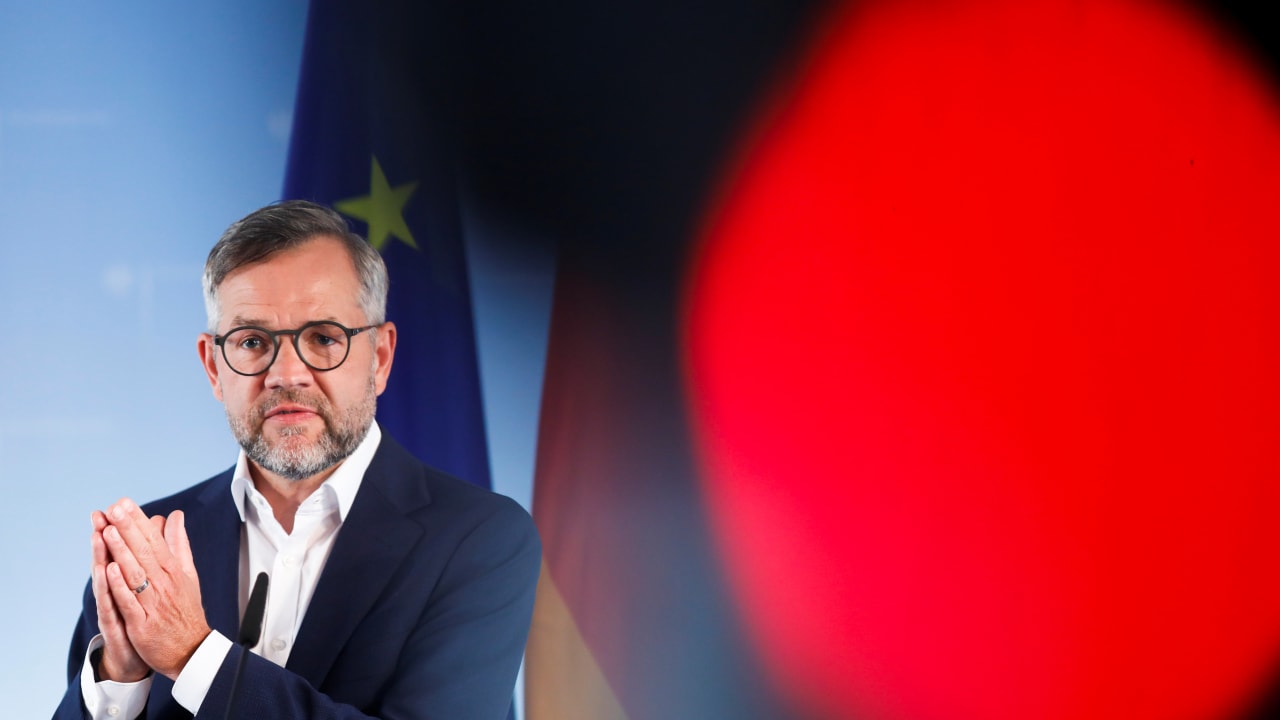
Speaking out in support of Israel has become increasingly difficult within Germany's Social Democratic Party (SPD), with even senior party figures who privately support Israel reluctant to defend it publicly, former Bundestag Foreign Affairs Committee chairman Michael Roth told Maariv ahead of his visit to Israel for the ELNET conference, which begins Sunday.
Roth, who served as chairman of the German parliament's Foreign Affairs Committee from 2021 to 2025 and as minister of state for Europe at the German Foreign Office from 2013 to 2021, has long been one of Germany's most prominent voices in support of Israel and in the fight against antisemitism.
Roth warns of growing anti-Israel sentiment within Germany's SPD
Since the October 7 Hamas attack, however, he has witnessed a profound shift in the political atmosphere within his own party, particularly among those on the Left from whom he had expected solidarity with Israel.
In an interview ahead of the ELNET conference in Jerusalem, scheduled for November 22-24 and expected to bring together more than 200 European guests, including leaders, parliamentarians, and diplomats, Roth discussed the gap between private support for Israel and the willingness to defend it publicly.
He also explained what Israel could do to help its friends in Germany, and why criticism of Prime Minister Benjamin Netanyahu's government should not translate into opposition to Israel itself.
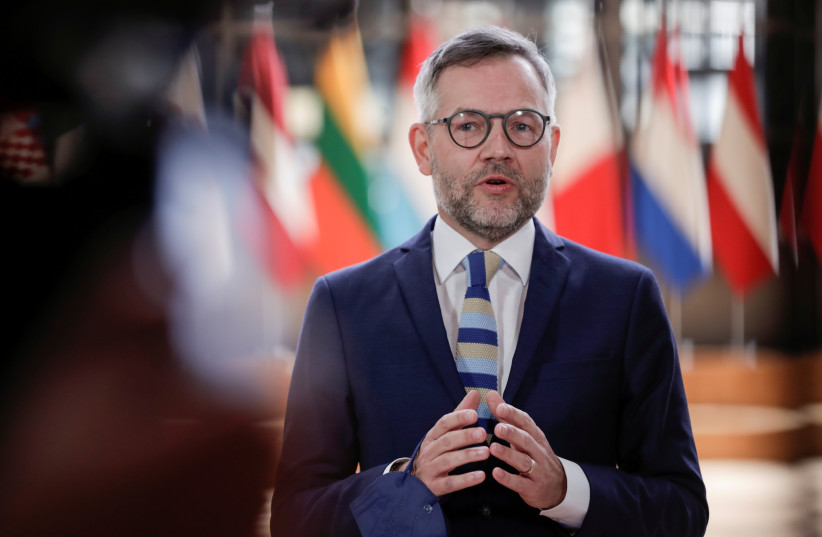
You have said that many senior figures in the SPD privately share your views on Israel. What prevents them from speaking out, and how much influence can Jerusalem have on that?
"They remain silent because speaking up for Israel has become a difficult task in my party. The mood on the Left has changed. A very simplistic postcolonial ideology divides the world into oppressors and victims, and Israel is always placed on the wrong side. The disturbing images from Gaza have influenced many people, and Hamas knew very well how to exploit them. And there are also politicians who simply do the math: Jews are a very small voting group in Germany, while other groups with immigrant backgrounds are much larger."
According to Roth, responsibility for confronting this shift lies primarily with German politicians themselves.
"Jerusalem cannot win this battle for us. We have to do it ourselves, in Germany, in Europe. But Jerusalem can make things easier or harder for its friends."
When did supporting Israel stop being a comfortable position within your political camp, and how did October 7 affect your personal relationships?
"It happened very quickly. Just a few days after the massacre, many people were already saying they hoped the Israelis would not go too far in their revenge. I was almost speechless because I had expected empathy first and foremost. Every democracy must defend its citizens, and Hamas cannot be stopped through talks alone."
Roth said his disappointment extended beyond political disagreements.
"Since then, I have heard things from colleagues in my party that are incompatible with the SPD's tradition. Sometimes you really do feel alone. Some people I knew are no longer part of my life, and from time to time, people also hurl insults at me in the street. I can live with that. But to be honest, I still do not fully understand what has happened to my political family."
Supporting Israel while criticizing Netanyahu
How do you distinguish between supporting Israel and criticizing the Netanyahu government, and where is that distinction being lost in Germany?
"For me, it is not complicated. I stand with Israel and its right to defend itself, within the framework of international law, and at the same time, I can criticize decisions made by a government. Israel is a democracy, and the government is only one part of it."
Roth made no secret of his opposition to the prime minister.
"I have never been a supporter of Mr. Netanyahu. He fell into every trap and did nothing to change the image of the 'bad Israeli.' In Germany, this distinction gets lost when people say they are only against Netanyahu, but then cannot find even a single good word to say about Israel. And it disappears completely when Jews in Germany are held responsible for what happens in Jerusalem. What do they have to do with it?"
What practical steps should Israeli leaders take to maintain ties with critical friends of Israel and the younger generation within the SPD?
"I am afraid I cannot offer a three-point plan. Israelis have more than enough to deal with at home, and I do not expect them to solve our problems in Germany as well."
Nevertheless, Roth had one direct request for Jerusalem.
"But I do have one request: Please do not make things harder for your friends. Settler violence against Palestinians has nothing to do with the fight against Hamas, Iran, or Hezbollah, and the state must stop it. The debate over the death penalty is not helpful either. Israel has already lost important friends in the United States, and I am not sure it can stand alone, without America and without Europe. So let us keep talking to one another, even when it is difficult."
What is the most important thing you would like Israelis to understand about their allies in Germany, and what do you hope to bring back to Berlin from the ELNET conference?
"Israelis should know that they have more friends in Germany than you might think from the loud and aggressive debates, and that a friend who criticizes your government is still a friend."
Roth also sought to challenge what he described as a widespread expectation in Germany that a change of government in Israel would fundamentally transform the country's security situation.
"What I want to bring back to Berlin is a little realism. Many Germans hope that everything will be much better once Mr. Netanyahu leaves. I hope so too. But Israelis want security and peace without terrorism, and therefore the fight against Hamas and other terrorist organizations will continue, regardless of who is prime minister. People in Berlin need to understand that."