It has been more than six years since the Abraham Accords were signed in September 2020. Much has happened since then, and many have tried to advance the Abraham Accords and expand its role.
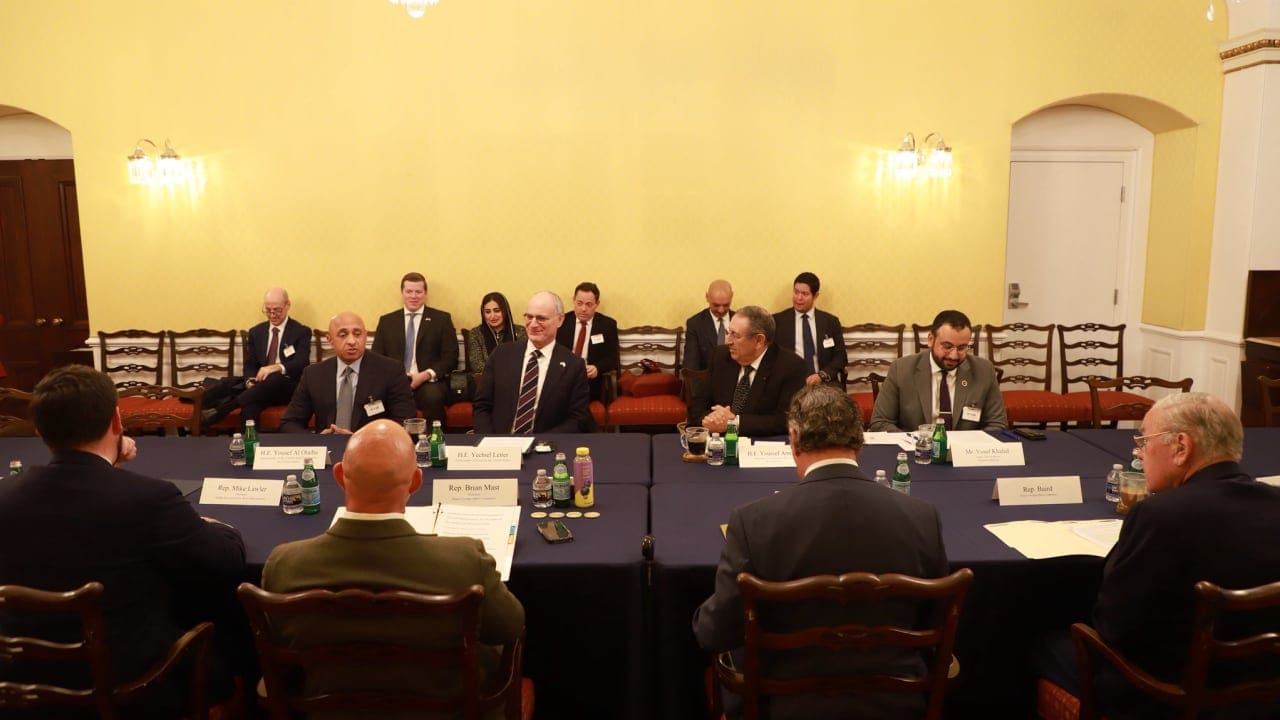
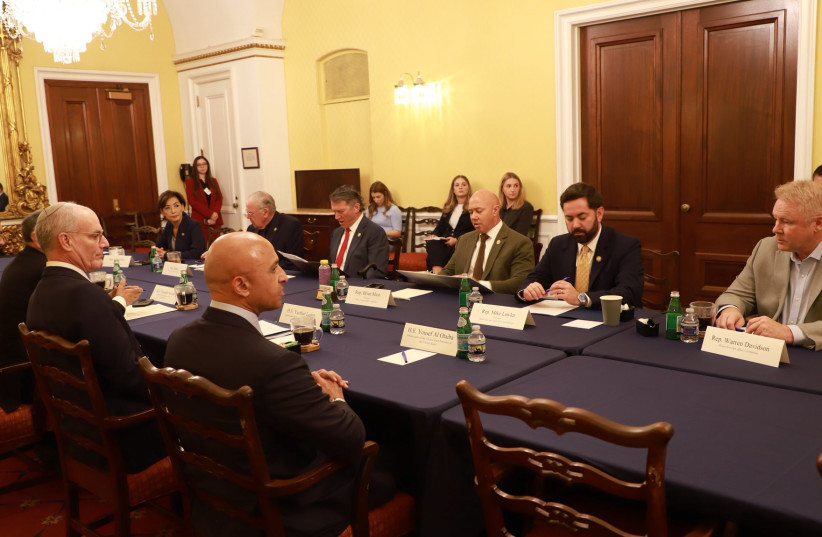
On Wednesday, Rep. Brian Mast (R-Florida), chairman of the House Foreign Affairs Committee (HFAC), said he had “convened the first-ever congressional forum between HFAC Members and Abraham Accords Ambassadors.”
“The discussion focused on strengthening regional cooperation, addressing challenges, and Congress’s role in advancing the next chapter of the Abraham Accords,” he posted on X/Twitter.
Mast is well known for his long-standing support of Israel. A US military veteran, he has served in Congress since 2017 and recently won reelection.
The meeting demonstrates the Abraham Accords’ continued relevance and its ability to bring together diplomats and members of Congress.
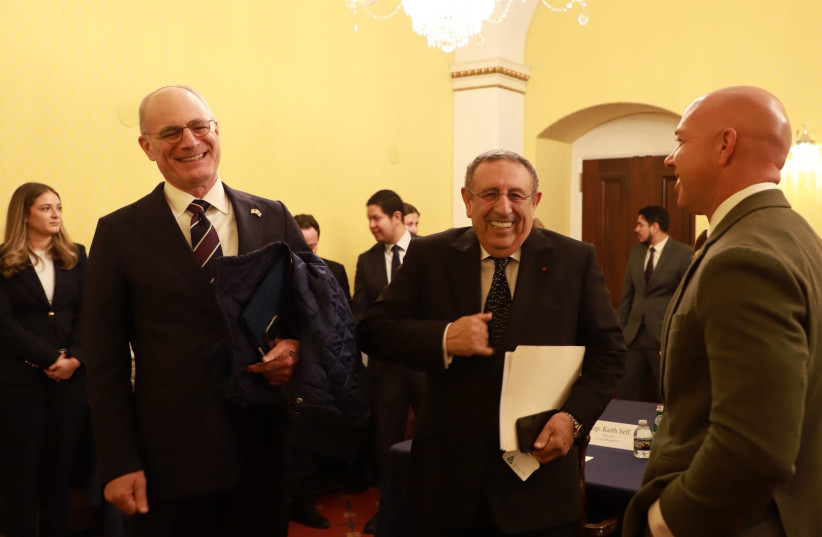
Youssef Amrani, Morocco’s ambassador to the US, said: “At the Capitol, I took part in a timely and engaging roundtable hosted by Congressman Brian Mast, chairman of the House Foreign Affairs Committee, bringing together members of the committee and the ambassadors of the UAE, Bahrain, and Israel.”
“We exchanged views on the progress made under the Abraham Accords, evolving regional dynamics, and the prospects for advancing cooperation and strengthening partnerships,” he said. “A valuable opportunity to reaffirm the importance of dialogue and sustained diplomatic engagement in shaping a more peaceful and prosperous region.”
Rep. Andy Barr (R-Kentucky), who is now his state’s senator-elect, said: “The Abraham Accords was a historic peace deal to advance relations between Israel and multiple Arab countries. I look forward to working with all parties involved to strengthen the Abraham Accords.”
Barr has been in Congress since 2013 and was reelected.
Rep. Bill Huizenga (R-Michigan) said he was glad to be part of “this special meeting today.”
Huizenga lost his election in Michigan.
How the midterms will reshape the committee
HFAC currently has 53 members, with 28 Republicans and 25 Democrats. These numbers are expected to change, given the Democrats’ sweeping win in recent elections.
Democrats appear to have flipped 43 seats during the midterm elections, which would bring their estimated total to 259 seats in Congress, with Republicans holding 176.
Expanding the Abraham Accords after the Iran war
HFAC held a meeting this July about the Abraham Accords. The hearing was titled: “Building a New Regional Security Architecture: The Next Phase of the Abraham Accords.”
At that meeting, former US ambassador to Israel Daniel Shapiro called for renewed efforts to expand the Abraham Accords. Shapiro, an Atlantic Council distinguished fellow, said the agreements had survived the regional turmoil following the October 7 massacre in 2023 and helped facilitate Israeli security cooperation with Gulf states, including the deployment of Iron Dome systems to the UAE.
He warned that the conflict with Iran, tensions between Saudi Arabia and the UAE, and the unresolved Palestinian issue threatened further regional integration.
Shapiro recommended reviving normalization talks with Saudi Arabia and advancing the India-Middle East-Europe Economic Corridor (IMEC). He also recommended that Israel pursues security agreements with Lebanon and Syria.
“Expanding the Abraham Accords would entrench regional integration as an organic force to help stabilize the region through interdependence and partnership,” Shapiro said.
“Since the war with Iran began on February 28, Israel deployed Iron Dome missile-defense systems and personnel to the UAE, the first time the system had ever been deployed outside of Israel or the United States,” he said.
“In 2022, then-Israeli foreign minister Yair Lapid worked with the Biden administration to launch the Negev Forum, a framework for regional cooperation that included Israel, the United States, the UAE, Egypt, Bahrain, and Morocco, which focused on shared challenges in the fields of education, health, tourism, food and water security, energy, and regional security,” Shapiro said.
It may now be possible for the Middle East to turn a page on its recent wave of conflicts and return to an era of optimism and cooperation.