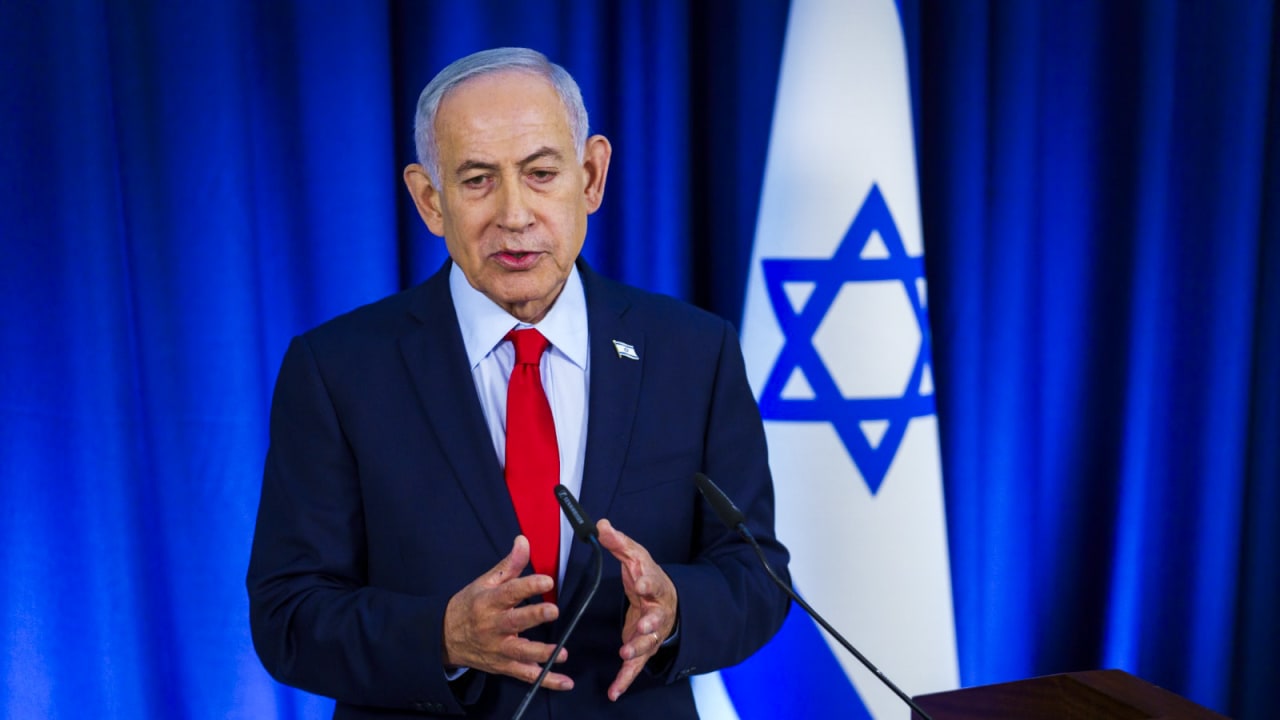
For many years, it has seemed that Israeli politics has ceased to revolve around the questions politics is supposed to address: security, the economy, foreign relations, religion and the state, the judicial system and the vision for Israel’s future. In their place stands one question, almost exclusively: Benjamin Netanyahu, yes or no.
Netanyahu is undoubtedly one of the most consequential figures in the history of Israeli politics. One can admire his achievements or criticize his policies, but it is difficult to dispute the fact that for years he has shaped not only the camp that supports him, but also the camp that opposes him. In fact, a significant part of Israel’s political system today defines itself not by what it believes in, but by its position on Netanyahu.
But no political era lasts forever. Sooner or later, the day will come when Netanyahu no longer leads Likud and is no longer a candidate for prime minister. That is precisely why it is worth asking now a question that is rarely raised: What happens the day after “anti-Netanyahu”?
This is not a question about Netanyahu. It is a question about his opponents.
For years, opposition to Netanyahu has managed to bring together people and parties with little in common, certainly not a shared worldview. Staunch right-wing figures have sat alongside centrists and left-wing politicians, supporters of free-market economics alongside social democrats, and conservatives alongside liberals. At times, the common denominator has been clearer than all their differences: the desire to replace Netanyahu.

The day Netanyahu leaves the political arena, that glue will weaken considerably.
Suddenly, parties will have to explain not only whom they oppose, but what they support.
What, for example, is the security doctrine of the political camp seeking to replace Netanyahu? Does it support the establishment of a Palestinian state? If so, under what conditions? If not, what alternative does it propose? Is it prepared to form a government dependent on Arab parties? What is its position on Israeli settlement in Judea and Samaria? What is its policy toward Iran?
Domestic issues will also require clear decisions. How should the authority of the Knesset be balanced against the power of the Supreme Court? Is judicial reform necessary, and if so, what kind? What should the Jewish character of the state look like? How should the crisis over haredi (ultra-Orthodox) military conscription be resolved? And what should be done about the cost of living and the growing disparities between Israel’s center and its periphery?
As long as Netanyahu remains at the center of the political arena, it is relatively easy to postpone these debates. The day after he leaves, they will erupt in full force.
But the biggest change may actually take place within Likud.
Likud is a long-established governing party with a broad electoral base, and it will not disappear when Netanyahu retires. The question will be who succeeds him and what kind of party Likud becomes. A new Likud leader could reshape Israel’s entire system of political alliances in a relatively short period of time.
Parties and politicians who have declared for years that they would not sit in a government with Netanyahu may find it difficult to explain why they would refuse to sit with Likud under a different leader. Once the personal veto disappears, the prospect of a broad unity government could shift from an almost impossible idea to a genuine possibility.
This may be the great paradox of this political era. Netanyahu is Likud’s greatest vote magnet. But when he leaves the political stage, although there is little doubt that Likud will lose seats, a new leader could retain most right-wing voters while perhaps reopening the door to cooperation with centrist parties. Parties that have built much of their identity around opposition to Netanyahu will have to reinvent themselves.
Israeli society will also have to change.
Netanyahu's personality-driven politics
Years of personality-driven politics have created camps that barely speak to one another. Every event is immediately judged according to whether it is good or bad for Netanyahu. A diplomatic achievement becomes an argument over who deserves credit, and every disagreement quickly turns into a political indictment. Even professional and policy questions take on partisan significance.
Over the years, countless worthy and important bills have failed simply because the opposition opposed them rather than because of their substance. This happened both when Likud was in government and when it was in opposition.
This situation is unhealthy for democracy.
Democracy needs disagreement, but when disagreements descend into ugly confrontations, many people lose faith in the legislature.
Israel needs a genuine debate among the Right, Center, and Left, not between “Only Bibi” and “Anyone but Bibi.” It needs parties capable of presenting a vision, not a list of political boycotts.
The day after Netanyahu will eventually come. But the day after “anti-Netanyahu” will present a far deeper test.
Can Israeli politics return to an era in which people vote primarily for a path and a vision, rather than simply against one person?
If the answer is yes, Netanyahu’s departure may mark not only the end of an extraordinary political era, but also an opportunity to shift Israel’s political debate away from the individual and back to ideas, from boycotts to partnership, and from politics driven by hatred and disqualification to a different kind of politics, one based on genuine debate.
After years in which Netanyahu has been the question, it is time for Israeli politics to begin preparing for the day when it will finally have to provide the answers.
The writer is CEO of Radios 100FM, president of the Israeli Radio Communications Association, an honorary consul and deputy dean of the Consular Diplomatic Corps. He previously served as a correspondent for IDF Radio and as a television correspondent for NBC.