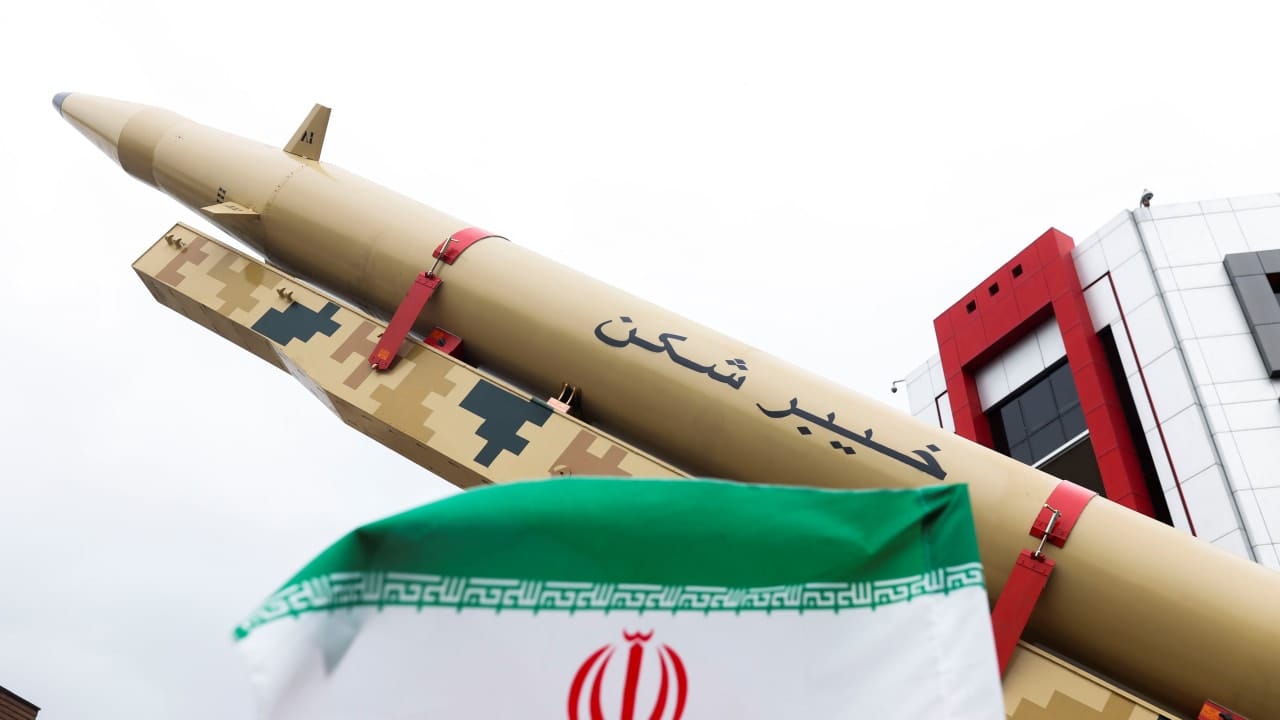
The US State Department sanctioned two individuals and an entity based in Belarus, Russia, and Nigeria for their involvement in Iran's efforts to procure man-portable air-defense systems (MANPADS) on Wednesday.
The sanctions are part of Operation Economic Outcast, the American effort to economically isolate Tehran and end the ongoing conflict between the two countries.
A day later, the Financial Times reported that Russia had signed a weapons deal with Iran to supply the regime with 90 advanced guided missile launchers.
The order, recently uncovered by FT, involved a 2024-2025 production schedule from major Russian defense manufacturer Vympa, which produces helicopter-mounted missile launchers used extensively in the Ukraine-Russia War.
An accompanying production schedule seen by FT listed seven Russian customers and two foreign buyers: China and "K-10."
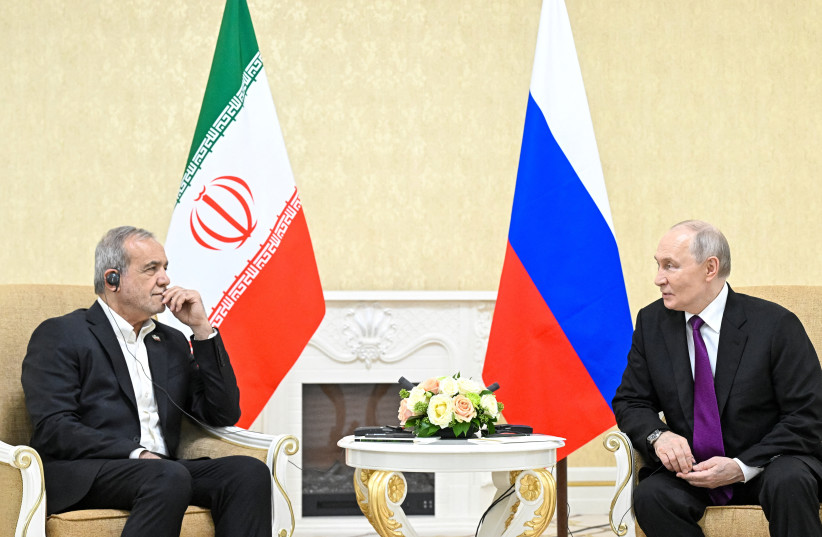
K-10, a person familiar with the matter and internal Russian documents obtained by FT told the outlet, is how Russia’s state-owned arms agency refers to Iran.
At least one contract for Yak-130 jet trainers and light attack aircraft, seen by the FT, lines up with publicly reported deliveries to Iran in 2023 and 2024.
“This missile is much faster than a drone and reaches its target far sooner. At around 230 meters per second, it covers 14km in about a minute,” a representative of Dallas Analytics told the FT. “The concept is shoot-and-scoot: move to a firing position, launch, hit the target, and withdraw quickly."
Russia-Iran ties deepen amidst conflict with the West
Iranian-Russian ties have evolved from a transactional relationship into a structured, strategic alliance, deepening across military, economic, and geopolitical domains. This weapons deal is the latest in a series of developments underscoring their growing defensive relationship.
The Iranian-Russian Treaty on Comprehensive Strategic Partnership, signed in January 2025, expanded economic cooperation amid US and international sanctions while strengthening military ties.
The FT has previously reported that Russia assisted Iran in the manufacturing of supersonic cruise missiles, sold it shoulder-launched anti-air missiles, and assisted the regime in the development of its nuclear weapons program.
“It is indicative of Russia’s willingness to continue supplying Iran despite its own wartime demands and with far less concern about Western objections than in the past,” Nicole Grajewski of the Carnegie Endowment for International Peace told FT.
Iran to receive Russian fighter jets
Earlier this week, Iranian Revolutionary Guard Corps (IRGC) spokesman General Mohammad Akraminia told local media that Iran is reportedly expected to receive Russian-made Su-35 fighter jets after the US-Iran war ends.
Akraminia claimed that before the war began at the end of February, the IRGC was in the final stages of procuring the fighter jets. He told the Persian-language outlet Tabnak that the Su-35s were meant to arrive before the war.
“We have also made progress domestically. Of course, purchasing equipment from abroad will bring us closer to advanced technologies, which we can then use as a foundation for further development,” he said.
While he did not specifically name Russia in the interview, it is the only established manufacturer of Su-35s. The fighter jet is Russian-designed and produced by Sukhoi, part of Russia's United Aircraft Corporation.
Jerusalem Post Staff contributed to this report.