
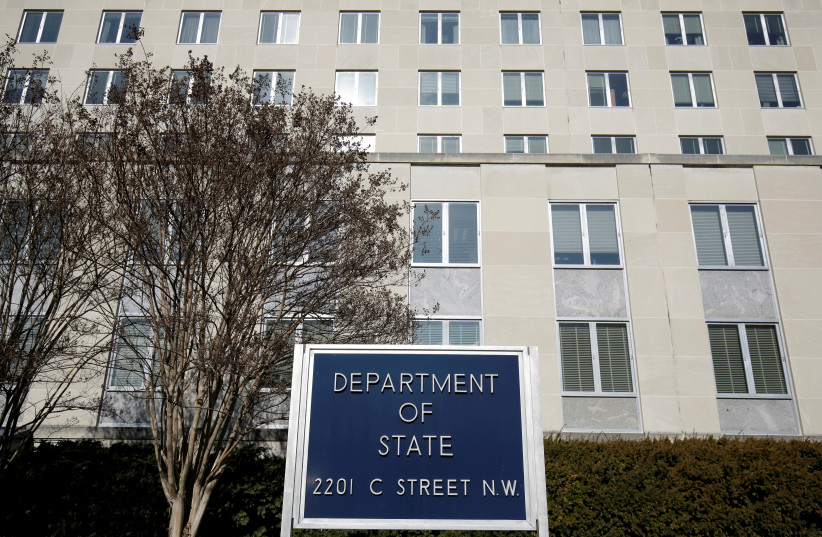
Beirut is failing to meet the minimum standards for eliminating human trafficking, the US State Department said in a report released earlier this month, explaining its decision to maintain Lebanon’s Tier 2 status.
The Lebanese government reported six trafficking investigations, 14 prosecutions and 13 convictions in 2025, compared with 73 prosecutions and no convictions in 2024.
Of the 14 suspects prosecuted last year, four were accused of sex trafficking, three of forced labor and seven of unspecified forms of trafficking, and a further 20 prosecutions from previous reporting periods remained ongoing.
Acknowledging that Beirut had made efforts to address the issue and that displacement caused by the Israel-Hezbollah war had complicated the situation, the department said Lebanon’s capacity to establish and implement anti-trafficking policies remained insufficient. Lebanon had failed to approve a National Action Plan, provided only fragmented data on trafficking cases and victim identification, and failed to adequately screen potential trafficking victims, leaving them vulnerable to penalties for unlawful acts committed as a direct result of being trafficked.
Lebanon’s parliament has also failed to approve a draft amendment to the country’s anti-trafficking law, despite the Cabinet approving it in October 2023. The proposed amendment seeks to address the burden of proof in trafficking cases, which under the 2011 law can fall on victims to prove they were exploited. The change aims to reduce the risk of victims being treated as criminals or immigration offenders rather than people subjected to coercion.
The department also highlighted the absence of a law prohibiting or penalizing employers who confiscate workers’ passports, a practice recognized as an indicator of potential trafficking. Lebanon’s employer-based visa system further increases migrant workers’ vulnerability to exploitation and hinders authorities’ ability to identify and protect trafficking victims.
Women, girls trafficked from Asia, Africa
Women and girls from southern Asia, as well as increasingly from East and West Africa, are still being exploited in domestic servitude in Lebanon. Many of these women, especially those from Nigeria, the Philippines and Ethiopia, face passport confiscation, withheld wages, excessive working hours, restrictions on their movement, and physical or sexual abuse. The economic crisis has also pushed some migrant workers and Lebanese nationals into prostitution due to a lack of economic opportunities, increasing their vulnerability to trafficking, according to the report.
Despite these shortcomings, Lebanon had introduced comprehensive standard operating procedures (SOPs) for identifying trafficking victims, the department said. The government also expanded cooperation with NGOs and international organizations to train officials in identifying victims and implementing the procedures. Other efforts included strengthening protections for domestic workers through new regulations and taking enforcement action against fraudulent recruitment agencies.
However, Lebanon lacks a dedicated judicial body to review cases referred by the Internal Security Forces’ Anti-Human Trafficking and Morality Protection Office despite increased international coordination. The government also reported no coordination with other countries on law enforcement operations, raising concerns about potential corruption and complicity in trafficking. Notably, Beirut reported no investigations, prosecutions, or convictions of government employees allegedly complicit in trafficking crimes.
Syrian refugees in Lebanon face heightened risk of trafficking
Reports also indicated that forced child labor among Lebanon’s Syrian population increased last year, particularly in agriculture, construction, street vending, and forced begging, with limited government efforts to address the problem.
The report identified non-state armed groups, including Hezbollah, as recruiting and using child soldiers, with Syrian refugee children particularly vulnerable to recruitment.
An estimated 900,000 Syrian refugees in Lebanon face heightened risks of sex and labor trafficking due to restrictions on legal employment and residency permits. Some are reportedly forced to work in exchange for food, shelter, or passage to Lebanon, leaving them vulnerable to debt bondage.
It was also flagged that the Anti-Human Trafficking and Morality Protection Office was reluctant to arrest parents accused of trafficking their children, often for forced begging, due to the lack of social and welfare services. NGOs were required to relocate children to foster families.
Lebanon has also relied on NGOs to provide shelter for adult trafficking victims, offering them only limited legal support. In some cases, foreign embassies housed victims when shelters became full.