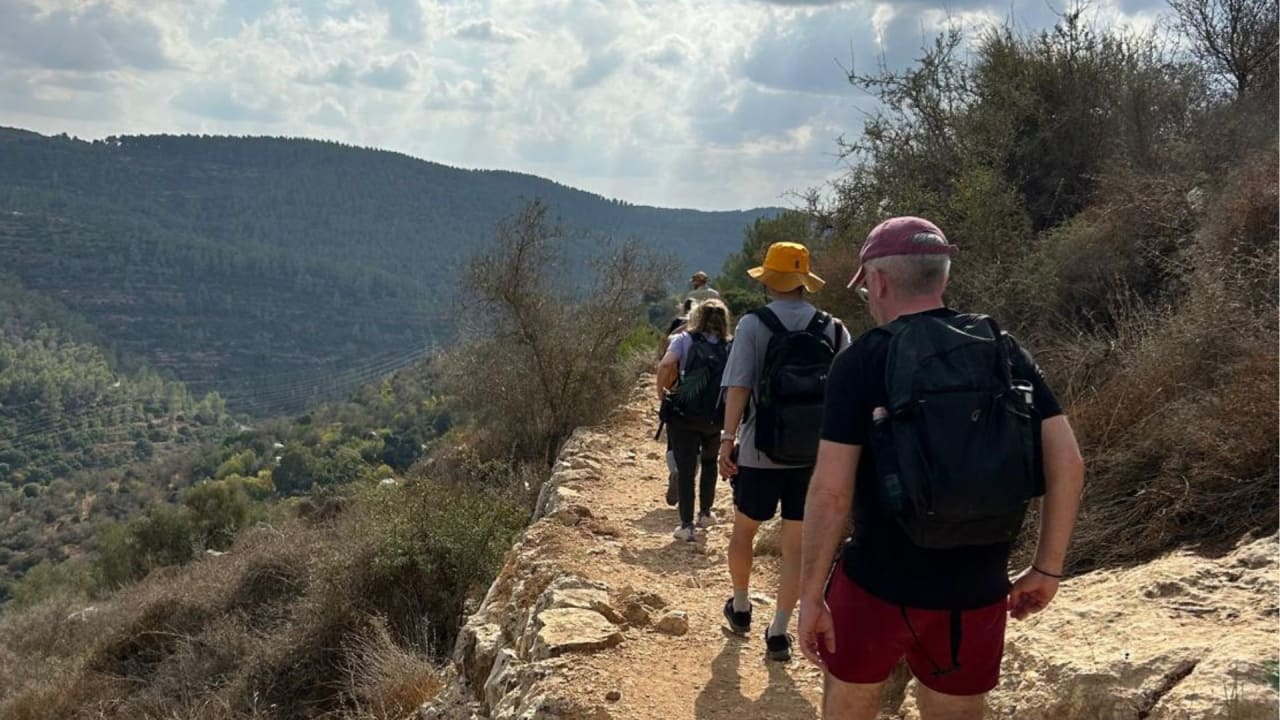
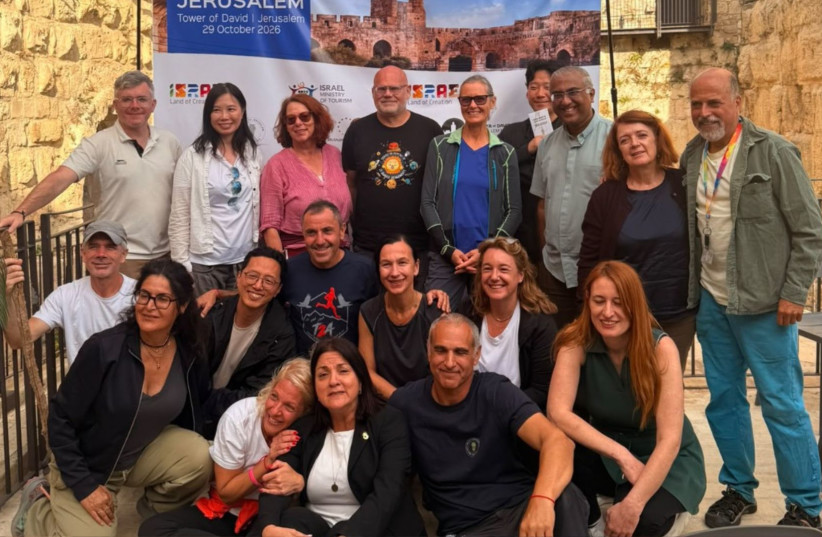
A group of pilgrims from nine European and Asian countries arrived at Jerusalem’s Jaffa Gate on Thursday, completing a five-day journey along sections of the 111-kilometer Way to Jerusalem pilgrimage route from Jaffa Port.
“I’m feeling quite humbled to look upon these walls for the first time,” Joshan, a Catholic priest from Mumbai, India, told The Jerusalem Post as the group approached the Old City walls.
“It’s my first trip to Jerusalem, and we have been walking for the last four, five days. And to finally behold the sight of Jerusalem is, I think, the most beautiful sight for a pilgrim.”
The Way to Jerusalem pilgrimage, organized by Golan Rice and Yael Tarasiuk-Nevo and hosted by the Tourism Ministry, is an initiative seeking to revive historic walking routes leading to Israel’s capital. It aims to enable both international visitors and locals to experience the country’s religious heritage, archaeological landmarks, and communities on foot.
The group, which also included pilgrims from Germany, Italy, South Korea, France, Spain, the United Kingdom, Austria, and Hong Kong, visited historic and religious sites in Jaffa, Rishon LeZion, Ramle, Tel Gezer, Latrun, and Ein Karem, among others.
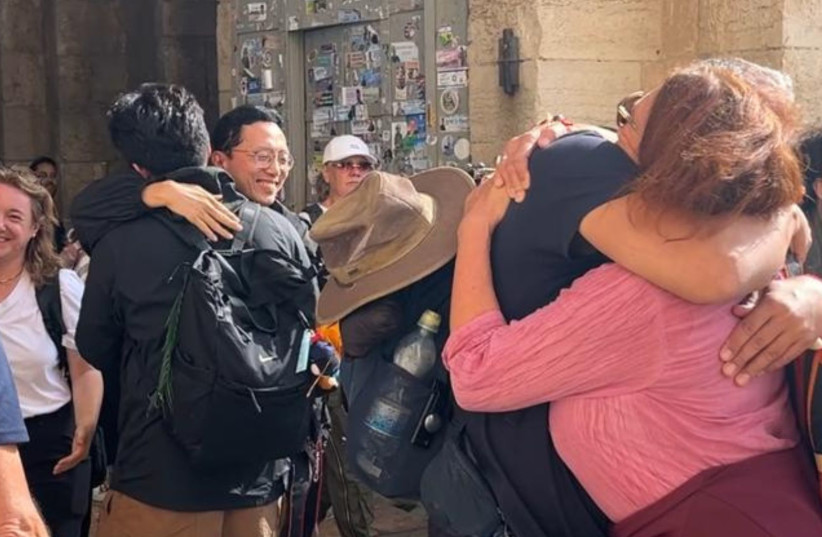
For Joshan, who was visiting Israel for the first time, the journey held particular significance because of his religious vocation.
“I'm a Catholic priest. So my calling, my faith, my vocation, everything's really coming together now for the first time as I behold the walls of Jerusalem,” he said, adding that he could hardly wait to enter the Old City.
Joon, a pilgrim from South Korea, was similarly moved by his first glimpse of Jerusalem's ancient walls.
“I'm very impressed,” he told the Post. “I'm really enjoying this moment that I finally made it.”
For Ariella, a pilgrim from Hong Kong, the journey proved more physically demanding than she had anticipated. She said she prepared by going to the gym and taking daily 45-minute walks, but was surprised by the distances covered.
“Fifteen kilometers every day,” she recalled. “And we walked 25,000 steps a day.” Despite the physical challenges, Ariella praised the support she received throughout the pilgrimage. “The team is very good, and the organizer is very helpful. They encouraged us,” she added.
Retracing historic routes on foot
Tarasiuk-Nevo, one of the organizers, explained that the route brings together sites associated with Jewish and Christian history, allowing pilgrims to encounter various religious traditions along the way.
“You can see, in this way, not only Christianity but all kinds of streams of Christianity,” she told the Post, referring to visits to the Trappist monastery at Latrun, the Benedictine community in Abu Ghosh, and Franciscan sites in Ein Karem, notably the Church of the Visitation.
Beyond the historical and religious sites, Tarasiuk-Nevo said the journey also allows pilgrims to develop their own spiritual connection to Jerusalem.
“What’s wonderful about this way is that it gives a platform to everyone to connect according to his own belief, his own interpretation,” she said.
Speaking at the concluding ceremony, Jerusalem Deputy Mayor Yael Biton de Lange thanked the pilgrims for visiting Israel during what she described as a particularly difficult period for the country, following three years of war.
“You came here as pioneers, and I hope you will leave Jerusalem as ambassadors,” she told the group, encouraging them to share their experiences with others upon returning home.
“Your voices can make a difference. Your stories can reach others, open hearts, and help people see Israel and Jerusalem and Jerusalemites through new eyes,” Biton de Lange said.