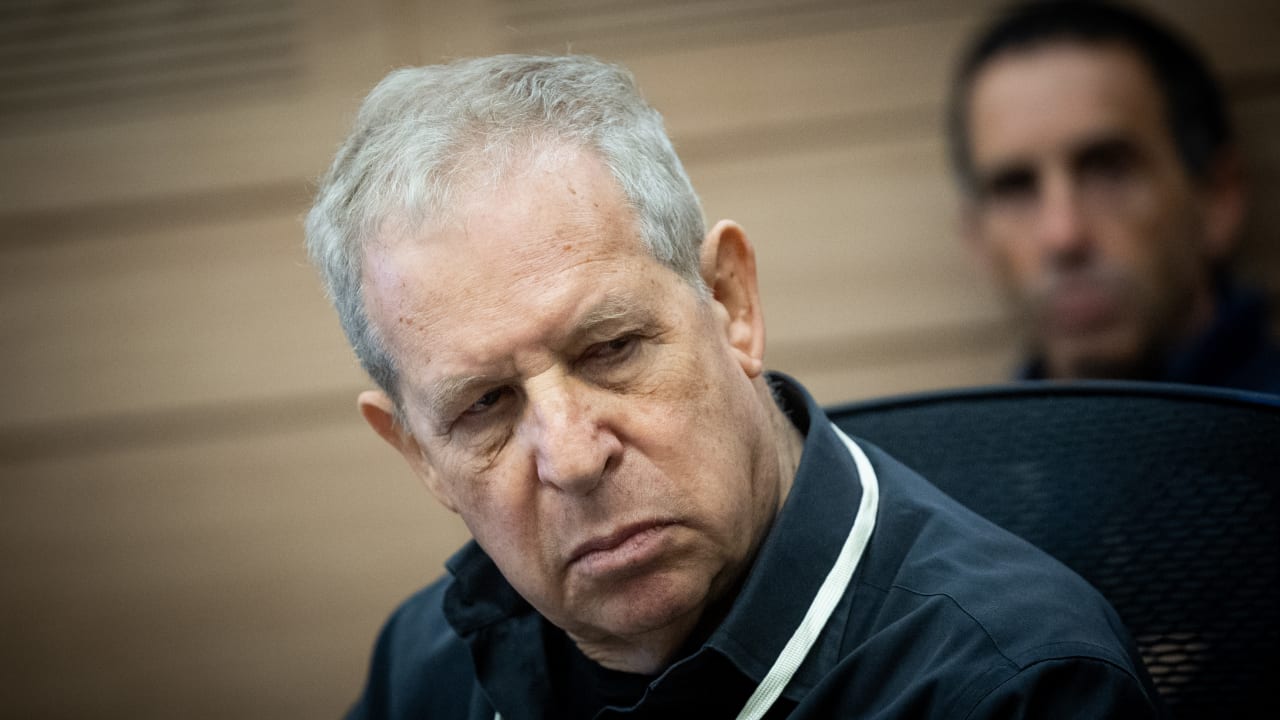
Former National Security Council chief Maj.-Gen. (res.) Giora Eiland warned that Israel is facing a difficult diplomatic situation, saying world leaders lack trust in the government and that its conduct is pushing countries away and could harm vital interests, during a Thursday interview with 103FM's Roni Bar-On and Aryeh Eldad.
Eiland, a former head of the IDF Operations Directorate and former head of the Planning Directorate, said Israel’s diplomatic challenges stem partly from a lack of trust among world leaders toward the government.
He argued that statements made by government officials, combined with Prime Minister Benjamin Netanyahu’s silence on them, have shaped international perceptions of Israel’s policies.
"I agree that our diplomatic situation is problematic in almost every arena, including with the US," Eiland said. "A process of trying to align positions is needed here. One of Israel’s problems is that most world leaders simply do not believe the Israeli government on the one hand. On the other hand, they listen very clearly and loudly to what people like Smotrich and Ben-Gvir say. They assume Netanyahu’s silence reflects the true policy of the Israeli government, and there is a lot of criticism over this."
Eiland also criticized what he described as Israel’s confrontational approach toward the international community, warning that the country’s conduct is pushing allies and other countries away.

"I think this entire conduct is stupid, childish and dangerous," Eiland said, arguing that Israel should focus on dialogue and presenting its arguments rather than trying to prove it is right and others are wrong. "But when the approach is confrontational, condescending and forceful on every issue, the world moves away from us, and that is dangerous." He added that he agrees with former prime minister Naftali Bennett that Israel needs to "listen and conduct different dialogues."
Eiland urges Israel to distinguish between core interests, compromises
Eiland also addressed the need for Israel to prioritize its interests, arguing that the government should distinguish between issues that are vital and those where compromise is possible.
"Clearly there are interests, but even when it comes to interests, you have to prioritize your own," Eiland said. He pointed to Gaza and the West Bank as examples, saying Israel must remain firm on core security issues in Gaza, while addressing issues in Judea and Samaria that he said harm Israel’s international standing.
Regarding the West Bank, Eiland criticized illegal activity by Jewish extremist settlers against Palestinians, which he said is documented by foreign reporters and perceived as the Israeli government "implicitly turning a blind eye," leading to international criticism.
"Instead of being in a position where you correct things in places that do not contradict your interests, you act in the opposite way, and as a result you erode vital interests that are the exact opposite of that," he explained.
Israel can still influence global opinion through dialogue
Eiland said Israel can still influence international opinion on disputed issues if it presents its arguments clearly and approaches discussions with a willingness to engage.
"You can convince many people, even on issues that seem far from the approach or interests of the other side, provided that you come with clean intentions and with genuinely security-based arguments," he said, adding that such efforts cannot be achieved "through slogans or wild attacks in the media."
Eiland concluded that the international community expects Israel to communicate openly and acknowledge mistakes when necessary. "The main thing the world expects is that we speak honestly, that we do not lie, that we present the real arguments and that we sometimes admit mistakes and change things," he said.